


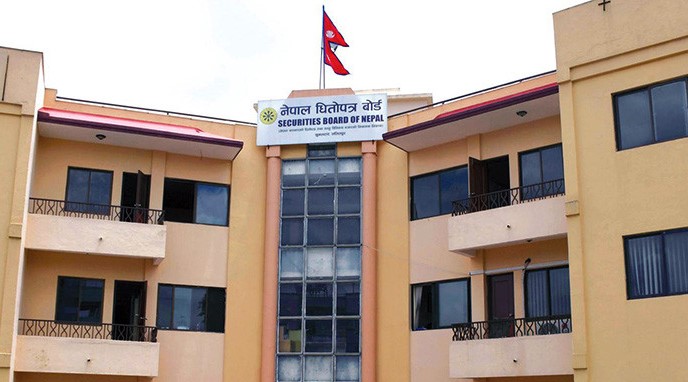
Kathmandu, July 24: The Securities Board of Nepal (SEBON), a regulatory body of security market of Nepal, has announced a set of policies and programs for the fiscal year 2025/26, targeting comprehensive reforms and development of the securities and commodity exchange markets.
The board introduced a detailed roadmap under seven major policy pillars, encompassing 88 specific programs. This announcement has garnered attention from both short-term investors in the stock market and long-term stakeholders in Nepal’s growing commodity exchange market.
Key vision and reforms
SEBON’s vision is to align Nepal’s capital markets with international standards, enhance investor protection, improve transparency, and introduce innovative financial instruments. A major emphasis is placed on leveraging information technology to modernize the market and improve financial literacy among investors.
Central to the agenda is the reform of existing legislation. SEBON plans to amend several key laws and regulations, including:
- Securities Act 2006
- Commodity Exchange Market Act 2017
- Mutual Fund Regulations 2010
- Specialized Investment Fund Regulations 2019
- Securities Listing Directives
- Credit Rating Regulations 2011
These reforms aim to simplify procedures, reduce the cost of issuing shares and bonds, and facilitate capital mobilization, especially for private sector, production-based enterprises. New legal provisions will also be introduced to govern commodity trading, clearing and settlement, warehousing, and market oversight.
Additionally, measures will be taken to ease the participation of Non-Resident Nepalis (NRNs) in securities trading.
SEBON places institutional capacity-building at the heart of its strategy. A four-year strategic plan (2025/26–2028/29) will guide regulatory improvements and the restructuring of key institutions such as Nepal Stock Exchange (NEPSE), and CDS and Clearing Limited.
The board is also committed to strengthening its regulatory framework to detect and penalize illegal market activities. Plans include:
- Real-time monitoring of daily transactions, company performance, and trading patterns
- On-site inspection of at least 15% of brokerages, merchant bankers, credit rating agencies, and fund managers annually
Market development and diversification
SEBON aims to expand the market by:
- Facilitating secondary market trading of government bonds
- Diversifying financial instruments
- Reviewing margin lending policies
- Introducing frameworks for intra-day trading and securities lending and borrowing
Investor protection and technology modernization
Investor protection is a priority, with a focus on reducing systemic risks, implementing risk-based supervision, and ensuring brokers execute investor orders effectively. The Investor Protection Fund will be further strengthened.
To keep pace with global financial markets, SEBON plans to modernize its IT infrastructure. Key initiatives include:
- Enhancing cybersecurity
- Upgrading the SEBON website to be more user-friendly and informative
- Promoting efficient and secure use of digital platforms
Promoting financial literacy
SEBON will continue its nationwide campaigns to promote financial literacy and investor awareness. Collaborations with universities, international regulators, and industry experts will be expanded. Events like World Investor Week and Global Money Week will include seminars, training programs and quizzes and essay competitions targeting investors, students, and the general public.
The board has also reaffirmed its commitment to providing regular services—such as licensing, registration, and renewal—to market participants, including:
- Brokers
- Depository participants
- Merchant bankers
- Credit rating agencies
- Institutional investors