


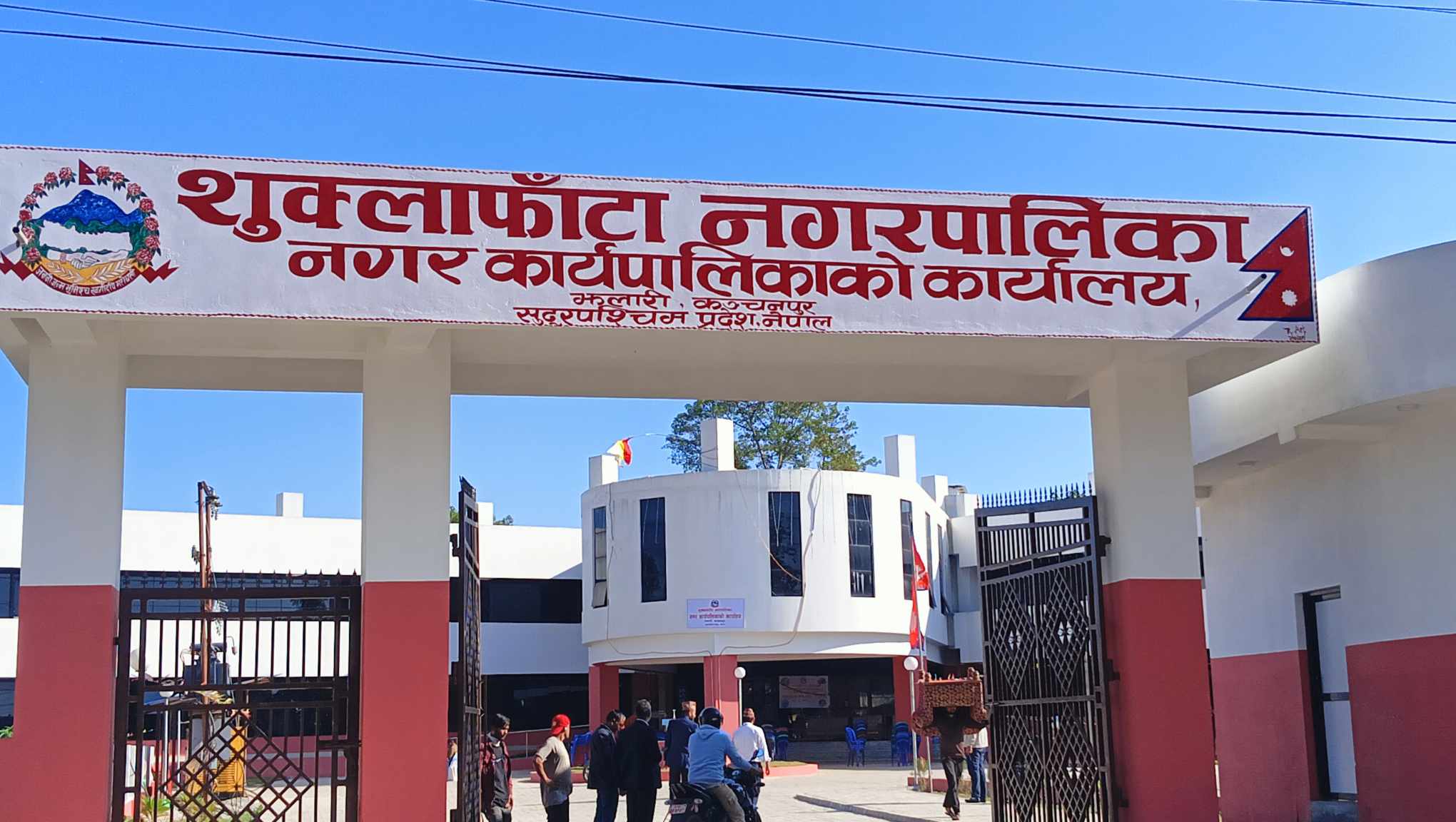
Kanchanpur, Aug 14: Residents of Simalphanta in Shuklaphanta municipality-7, Kanchanpur, have been living under constant threat of wild tusker rampage for the past two weeks.
According to locals, herds of elephants have been entering the human settlement before sunset, damaging crops and creating panic among villagers.
The elephants have already destroyed paddy planted in around four bigha of land, affecting more than 35 families. “In previous years, the elephants had come only when the crops were almost ready for harvest. But this year, they’ve started arriving early.
If this continues, there will be nothing left in our fields,” said local resident Keshab Dutta Joshi. The threat has escalated to the point where the elephants are now approaching residential areas.
“Last night, I opened the door and found an elephant just crossing the yard. If I had encountered the wild species, I might not be alive today,” Joshi added, expressing gratitude for narrowly escaping harm.
Most of the men from the village are currently in India for work, leaving the women to manage both household duties and guard the fields at night. “We need to work during the day to survive. At night, we stay awake to chase away the elephants,” said one of the local residents.
The elephants are reportedly entering by breaching mesh wire fencing along the banks of the Syali River. Locals have long been requesting the installation of electric fencing that gives harmless shocks to deter the animals, but their calls have gone unanswered.
“In the past, showing them fire would scare the wild animal away. But now, that doesn’t even work,” said Dansingh Kunwar.
The worst-hit areas are Colonies 1 and 2 of Simalphanta. Ward Chair Pratap Singh said that due to budget constraints, the ward office is unable to fund the installation of electric fencing.
“It is too costly for us. We have requested support from the municipal and provincial governments, but no action has been taken yet,” he said.
All ten wards of the municipality, located in the buffer zone of the Shuklaphanta National Park, are affected. With the arrival of the monsoon, rainwater accumulates in India’s Dudhwa National Park, prompting elephant herds to migrate towards Nepal via the Laljhadi Conservation Area.
Movement of wild elephants during the monsoon season is common in the region, often resulting in crop destruction and, in some cases, human casualties. #nepal #Simalphanta #rss