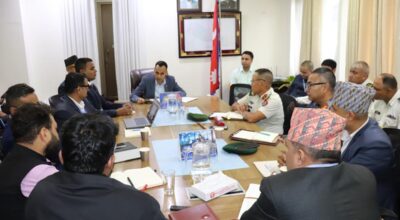



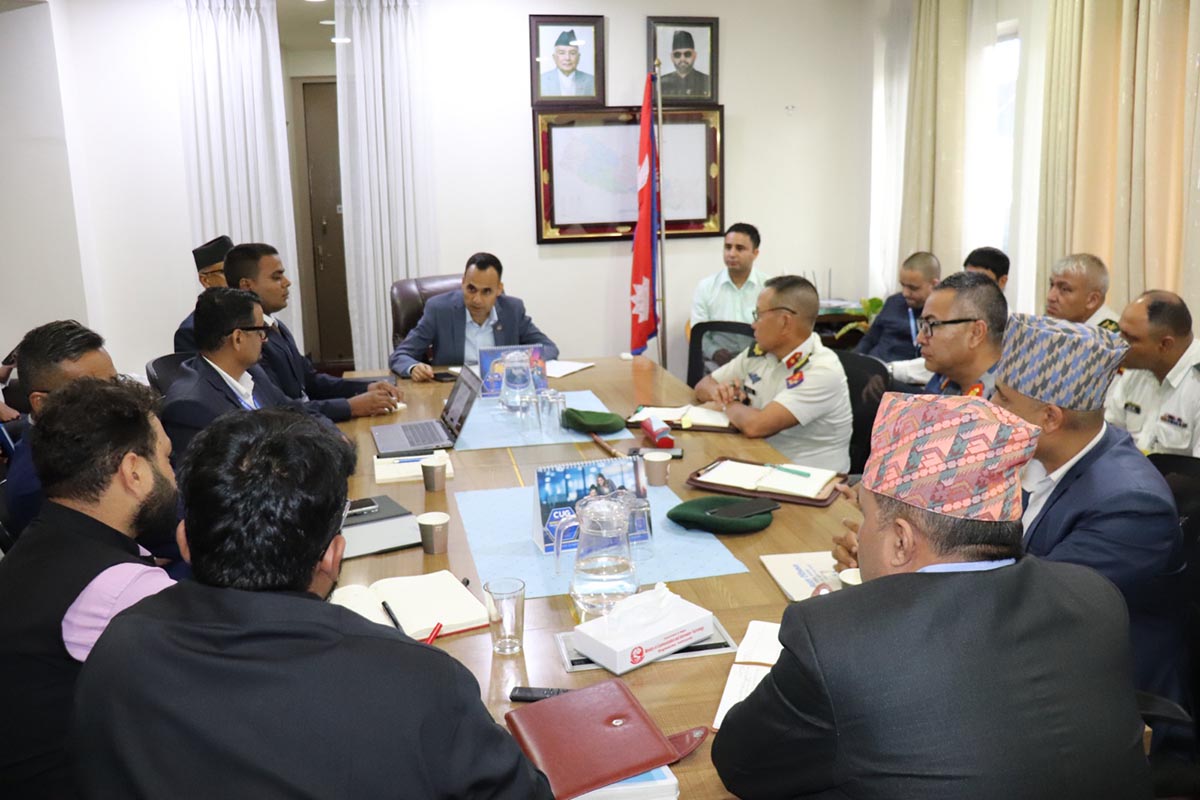
Kathmandu, July 14: The Ministry of Information and Communications held discussions with various stakeholders about the effectiveness of multi-hazards early warning system (EWS).
The ministry initiated the discussion to ensure fast, reliable and effective dissemination of early warning information to the citizens in the event of an impending disaster.
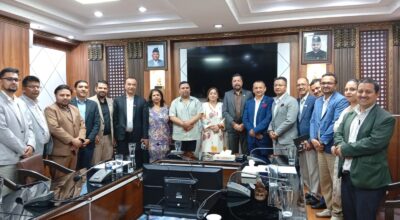
In the discussion at the ministry on Tuesday, a consultation was held on adopting modern technologies like ‘cell broadcast’ to make the disaster EWS more effective, as well as on innovative technology, budget, human resource, legal arrangements, and institutional coordination.
On the occasion, Minister for Information and Communications Dr Bikram Timilsina acquired information about the current status of the disaster early warning system, and instructed telecom service provider companies to make the current system more effective.
Since citizen safety is the most important during disasters, making the early warning system reliable, fast, and tech-friendly is a priority for the government, he noted.
Representatives from security agencies, including the Nepal Army, Nepal Police, Armed Police Force, Nepal Telecommunications Authority, National Disaster Risk Reduction and Management Authority, Department of Hydrology and Meteorology, Department of Mines and Geology, National Seismological Centre, Nepal Telecom, Ncell, and other related agencies participated in the discussion.
During disasters, a ‘cell broadcast’ system could be suitable for delivering messages to all citizens in a specific area at the same time, so discussions were held realizing the need for coordination between relevant agencies for execution.
The system was suggested to be suitable for Nepal as it did not require mobile numbers or SIM card details and real-time warning messages can be sent to all mobile devices active in a certain geographical area simultaneously.
The participants in the discussion shared the Department of Hydrology and Meteorology’s current practice of sending early warnings via SMS to areas at risk of floods, landslides, and heavy rainfall.
They emphasized the need of a unified early warning system for all types of disasters, including wildfires, earthquakes, avalanches, lightning, industrial accidents, and others in the future.
To make the system effective, a mechanism should be placed to collect, update, and analyze disaster-related information on time and to coordinate immediately between relevant agencies to deliver information to the public. #nepal #rss