


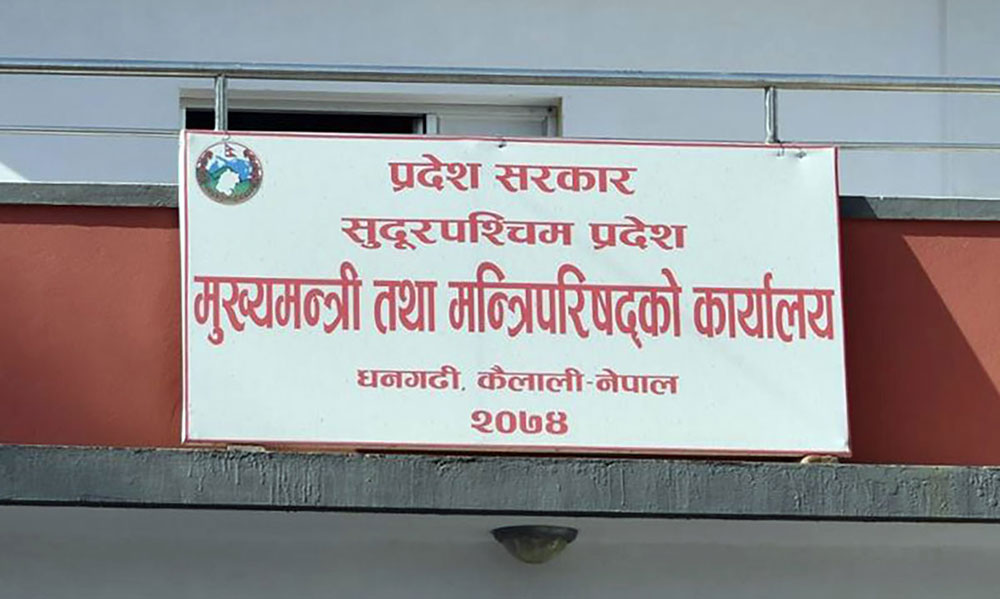
Dhangadhi, May 27: A regional strategic action plan has been formulated in Sudurpashchim Province to improve access to mental health services and address related challenges. The five-year plan (2082–2087 B.S.) prioritizes mental health within the provincial healthcare system, aiming to ensure equality and accessibility to quality services.
The plan also outlines managing necessary human resources, medicines, and medical supplies for service delivery, while encouraging collaboration among government, non-governmental, and private sectors.
Despite rising mental health concerns, a lack of psychiatrists and essential resources in hospitals has hindered proper care. Over 70% of individuals with mental health issues in Nepal still lack access to appropriate services. Experts report that 5.2% of adolescents aged 13–17 and 10% of adults over 18 suffer from mental health conditions. Suicide rates continue to increase due to untreated or complex mental disorders.
The strategy envisions strengthening the province’s healthcare system to improve mental and psychosocial services. It focuses on raising public awareness to dispel superstitions surrounding mental health, ensuring equitable access to quality care, early identification and management of risks and complications, and integrating mental health into emergency and disaster response frameworks.
Himal Gaire, Policy, Strategy, and Governance Chief at the Center for Mental Health and Counseling (CMC), expressed confidence that the action plan will effectively address Sudurpashchim’s key mental health priorities. He said the plan would help reduce suicide rates, substance abuse, and societal stigma toward mental illness.
Gaire noted that prior to finalizing the strategy, feedback was gathered from stakeholders in Dadeldhura, Bajhang, Baitadi, and Kanchanpur. Similar strategic plans have already been implemented in Karnali and Lumbini provinces.
Data presented by Sunita Sharma, an official from the Ministry of Social Development, showed that depression and anxiety are the most prevalent mental health conditions in Nepal—accounting for 28% and 40% of cases, respectively.
Dr. Hemraj Regmi, Secretary at the Ministry of Social Development, emphasized the need for collective effort beyond the ministry to solve mental health problems.
According to the World Health Organization (WHO), globally, 11 out of every 100,000 people commit suicide due to mental issues. In Nepal, this rate is 23.4 per 100,000. Contributing factors in developing countries include war, natural disasters, poverty, discrimination, orphanhood, loneliness, prolonged stress, chronic illness, and substance abuse. #nepal #health #mental