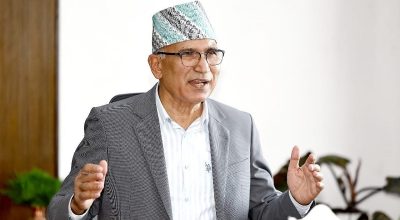




Kathmandu, Jan 5: Dr Bhim Adhikari, Senior Environmental Economist at the Canada-based International Development Research Centre (IDRC), has emphasized that Nepal must abandon a charity-based narrative on climate change and instead assert its rightful claim to climate finance through evidence-driven advocacy, investment-ready projects, and strong political leadership.
Drawing on more than three decades of experience working with the United Nations and international institutions, Dr Adhikari described the global climate crisis as a product of “historical injustice.” He argued that countries like Nepal are bearing a disproportionate burden of climate impacts despite having contributed negligibly to global emissions, while simultaneously being forced to rely on high-interest loans to respond to climate-induced disasters.
Unless Nepal places climate change at the core of its national economic strategy and firmly establishes its mountain agenda—supported by credible data demonstrating the global value of its forests and water resources—Dr Adhikari warned that the country will remain trapped in climate injustice.
Below are excerpts from an interview with News Agency Nepal:
Climate finance has been debated over three decades. Is this simply a demand for funding, or is there a deeper principle involved?
Dr Adhikari: It’s not merely a request for money; it’s a matter of justice. The guiding principle is that the polluter must pay. Developed countries have driven industrial growth for centuries, emitting vast amount of carbon into the atmosphere. The consequences of emission are now being borne by developing countries and small island nations alike. Our fragile mountain glacier bases are rapidly melting, and island nations have been experienced the immediate submerging into the ocean. This is why, since the 1990s, the global debate has been clear: those who created the problem must finance the solution.
Under the 2015 Paris Agreement, developed countries committed to mobilizing USD 100 billion annually in climate finance. Ironically, it took seven to eight years to fulfill that pledge. Even when the target was finally met in 2024, the amount had already become grossly inadequate—little more than a drop in the ocean compared to actual global needs.
How significant is the gap between Nepal’s climate finance requirements and what it actually receiving?
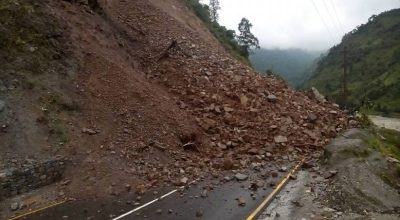
The gap is deeply concerning. Nepal is estimated to require nearly US$ 46 billion by 2030 to address climate risks such as floods, landslides, and glacier melt. However, the country currently receives only around US$ 400 million across energy, adaptation, and mitigation combined. This shortfall pushes Nepal into a debt trap. On one hand, the government struggles to finance essential sectors such as education and health; surprisingly on the other, climate disasters compel the country to borrow foreign loans. Paying interest on debt incurred to address pollution caused by others is profoundly unjust.
There is growing discussion on compensation through the Loss and Damage Fund. Does every disaster qualify as climate-related loss and damage?
This is a highly technical and often misunderstood issue everywhere. Many assume that all floods or landslides automatically qualify as loss and damage fund, but that is not necessarily the case. Loss and damage occurs when adaptation and mitigation measures fail and the resulting harm becomes irreversible.

There are two dimensions to this issue. The first involves extreme events—such as flash floods, landslides, or storms—that cause immediate destruction. The second, and more complex, involves slow-onset events. For instance, desertification in Senegal has permanently rendered land unusable. In Nepal’s case, glacier melt is a slow-onset phenomenon. A small amount of ice melts each year, but over decades, snow-covered mountains turn into bare rock. That lost ice will never return.
Nepal must clearly communicate on the global stage that glacier loss is not just another disaster—it represents a permanent existential threat.
Given Nepal’s limited data, can citizen science serve as a credible basis for accessing the Loss and Damage Fund?
Access to the Loss and Damage Fund cannot be secured through emotional appeals or broad statements that climate change has affected Nepal. What convinces the international community is data and verifiable evidence. This is where citizen science becomes particularly relevant.
Local communities are often the first witnesses to loss and damage. They can accurately document changes such as rainfall patterns, drying water sources, or disappearing species—sometimes more effectively than satellites. However, anecdotal accounts alone are insufficient for international claims.
What is required is rigorous scientific validation of citizen-generated data. When lived experience is systematically documented and scientifically verified, it becomes credible and compelling evidence. This is the package Nepal must present at COP and other international forums: community-based data supported by scientific validation, clearly demonstrating the scale of loss and justifying compensation.
Bhutan has successfully established a distinct international identity. Nepal, too, must assert its agenda, including through citizen science. Institutions such as the Green Climate Fund consistently ask two questions: What is your concrete plan, and what is your investment framework? Too often, Nepal lacks adequate preparation.
Brazil offers a useful example. In preparation for COP-30, it established a national country platform, clearly identifying 16–17 priority areas and a financing requirement of USD 17 billion by 2030. This clarity enabled Brazil to mobilize significant funding. Nepal must move away from fragmented, small-scale initiatives and instead develop an integrated national platform that clearly articulates priorities and investment needs.
Even when climate finance is mobilized, it often fails to reach affected communities. How can this be addressed?
There is widespread concern that climate finance remains concentrated at the federal level or is absorbed by Kathmandu-based consultations, rather than reaching disaster-affected communities. Current systems are inadequate in delivering support to vulnerable farmers and households.
Nepal must establish mechanisms that enable local governments and communities to directly access climate finance. Financial instruments such as climate insurance, social protection schemes, and concessional loans must be extended to villages and high-risk populations.
Nepal’s forest cover has reportedly increased to 47 percent, and carbon trading is frequently discussed. Can Nepal realistically benefit from carbon markets?
Global demand for high-quality carbon credits is growing rapidly. Large corporations that cannot sufficiently reduce emissions domestically are increasingly seeking to invest in forests and clean energy projects abroad. Nepal’s forests and hydro-power potential represent significant economic opportunities in this context.
African countries offer a useful precedent. Nine nations have jointly launched the Africa Carbon Market Initiative, aiming to generate 30 million jobs over ten years and sell one billion carbon credits. Nepal must strengthen its carbon measurement, reporting, and verification systems if it is to compete effectively in global markets.
At the same time, risks such as “green grabbing,” where communities are displaced in the name of environmental projects, must be carefully managed. Strong governance and safeguards are essential.
Nepal regularly participates in COP meetings, yet outcomes remain limited. Why?
Nepal’s primary weakness is the absence of strong political leadership and climate champions. Climate change is often treated as a sectoral issue confined to the Ministry of Forests and Environment. In contrast, in countries such as Rwanda and Ethiopia, the Ministry of Finance leads climate action.
Unless the Finance Minister and the Ministry of Finance take ownership of the climate agenda, large-scale funding will remain elusive. Another challenge lies in the quality of Nepal’s international engagement. Leaders such as Barbados Prime Minister Mia Mottley have successfully amplified the voices of vulnerable countries by demanding reform of the global financial system. Pakistan’s leadership similarly drew global attention during its devastating floods.
Nepal must establish a permanent, technically competent team dedicated to COP processes. With strong internal preparation, the country must project a confident, evidence-based, and persuasive presence internationally. Nepal’s message must be clear: when its mountains melt, the water security of billions across South Asia is at stake.
What immediate actions should Nepal take?
Three steps are urgently required. First, Nepal must establish a robust climate finance mechanism under the leadership of the Ministry of Finance and treat climate change as a national economic priority.
Second, rather than merely demanding funds, Nepal must develop bankable projects and a comprehensive country platform that clearly defines priorities, investment needs, and implementation frameworks credible to international financiers.
Third, Nepal must ensure that climate finance flows effectively from Kathmandu to local governments and frontline communities. Without strong governance and transparent systems, climate finance cannot be used effectively or equitably.