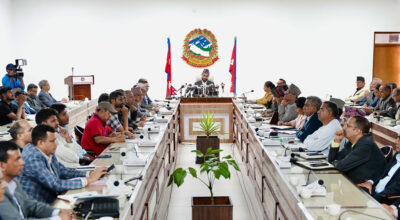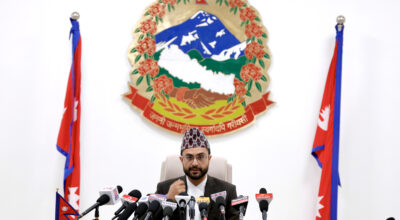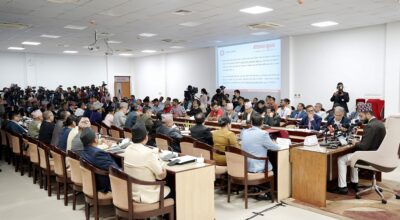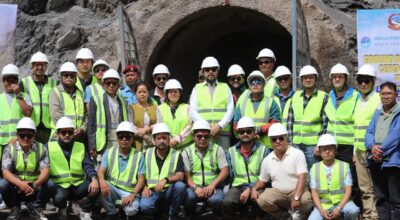



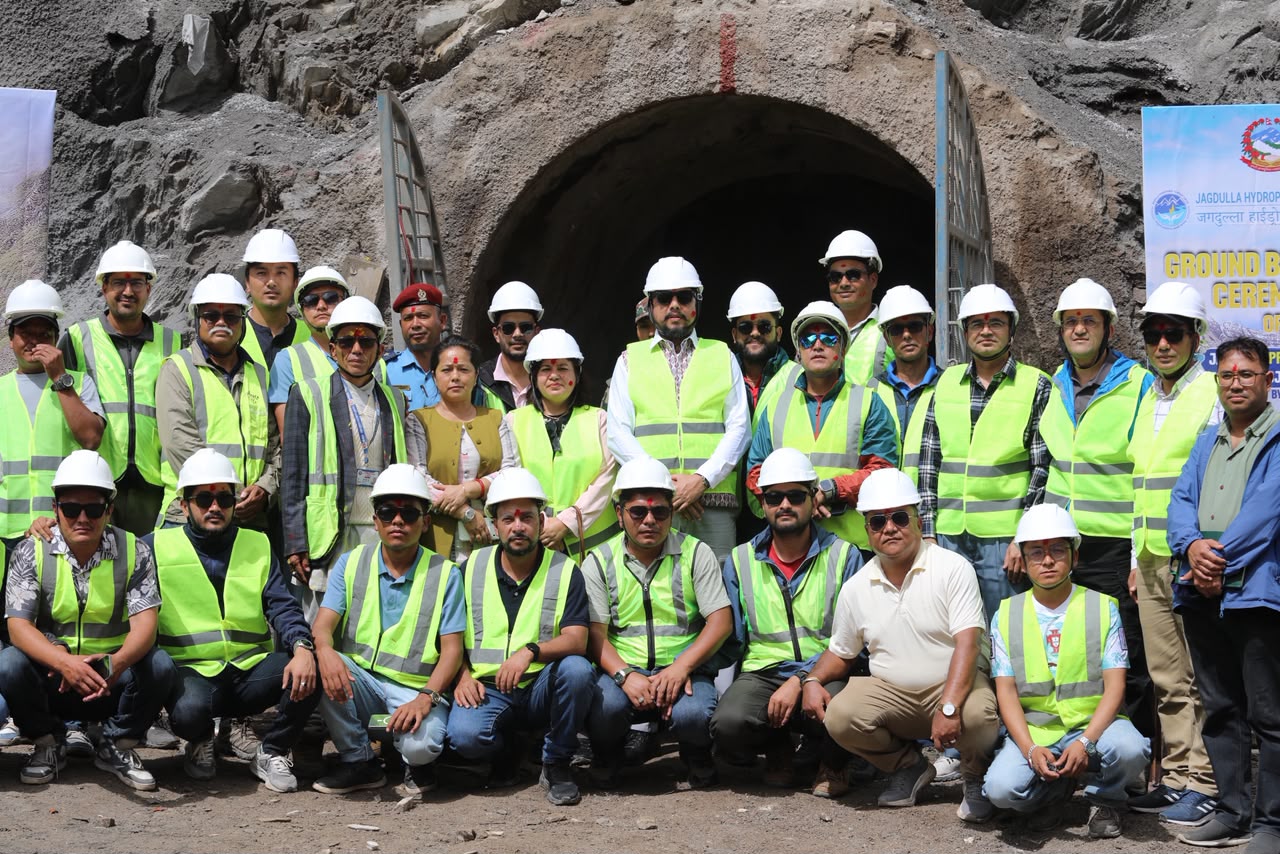
Dolpa, July 4: Construction of the main tunnel for the 106 MW Jagdulla Semi-Reservoir Hydropower Project in Dolpa officially began on Thursday, marking a major milestone in one of Karnali Province’s largest hydropower developments.
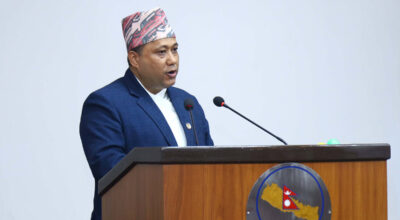
The tunnel construction was inaugurated by Minister for Energy, Water Resources and Irrigation, Biraj Bhakta Shrestha, at Ila in Mudkechula Rural Municipality-4.
Speaking at the ceremony, Minister Shrestha described the project as a landmark initiative for the energy and economic development of both Dolpa and the entire Karnali Province. Developed through joint ownership and investment by the federal, provincial, and local governments, the project reflects a collaborative approach to infrastructure development. He expressed confidence that construction would be completed on schedule and emphasized the importance of continued cooperation among all levels of government, local communities, and other stakeholders.
Secretary at the Ministry of Energy, Water Resources and Irrigation, Sarita Dawadi, said the support and participation of local communities had played a crucial role in advancing the project. She urged all concerned agencies to continue providing the necessary support to ensure timely completion.
According to Sanjay Sapkota, Chief Executive Officer of Jagdulla Hydropower Company, the project will contribute not only to electricity generation but also to the economic, social, and infrastructure development of Karnali Province. He said the project, being implemented under the People’s Hydropower Programme, serves as a model by combining government ownership, local participation, and domestic financing.
The company stated that work under Lot One has already been completed.
Jagdulla Hydropower Company is developing two semi-reservoir hydropower projects in Jagdulla and Mudkechula rural municipalities of Dolpa. The 106 MW Jagdulla Hydropower Project and the 124.35 MW Jagdulla-A Hydropower Project will together generate a total installed capacity of 230.35 MW.
Beyond power generation, the company said the projects are significantly improving Dolpa’s physical infrastructure. Using its own investment, it has constructed a 100-metre concrete bridge over the Bheri River, built access roads along the Tribeni–Mudkechula–Jagdulla road section, and installed ten Bailey bridges. These developments have not only supported project construction but have also improved local transportation and economic activities.
According to the company, improved road connectivity has transformed travel in the region. A journey from Nepalgunj to Dolpa, which previously took more than three days, can now be completed within a single day. The upgraded road network has also created the possibility of overnight bus services between Dunai and Kathmandu.
The infrastructure is expected to support long-term tourism growth by improving access to destinations such as Rara Lake, Shey Phoksundo Lake, Jagdulla Lake, Upper Dolpa, Jumla, and Mugu.
The project is also expected to generate significant economic benefits. Once operational, it is projected to provide approximately Rs. 195 million in annual royalties to the federal government. The Karnali Provincial Government and the concerned local governments are each expected to receive around Rs. 95 million annually, strengthening both local and regional economies.
The company stated that all major preparatory work for the 106 MW project—including the detailed engineering design, Environmental Impact Assessment (EIA), land acquisition, Power Purchase Agreement (PPA), financial closure, and regulatory approvals—has been completed. Physical construction officially began after the Engineering, Procurement, and Construction (EPC) contract was signed on August 11, 2025.
For the 124.35 MW Jagdulla-A Project, the detailed engineering study has been completed, while the environmental assessment, PPA, financial closure, and approval processes are in their final stages.
The project is being developed with majority government ownership. Under the ownership structure, 51 percent of the company’s shares will be jointly held by government agencies, the Karnali Provincial Government, and local governments, while the remaining 49 percent will be owned by the general public. Of the public shares, 10 percent has been reserved for local residents, and an additional 3 percent will be allocated to landowners whose properties fall within the transmission line’s right-of-way.
According to the company, approximately Rs. 16.66 billion in debt financing has been secured entirely from domestic financial institutions. The financing consortium includes Nabil Bank, Employees Provident Fund (EPF), Hydroelectricity Investment and Development Company Limited (HIDCL), Laxmi Sunrise Bank, Everest Bank, and NIC Asia Bank. #nepal