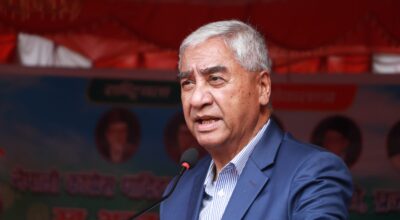



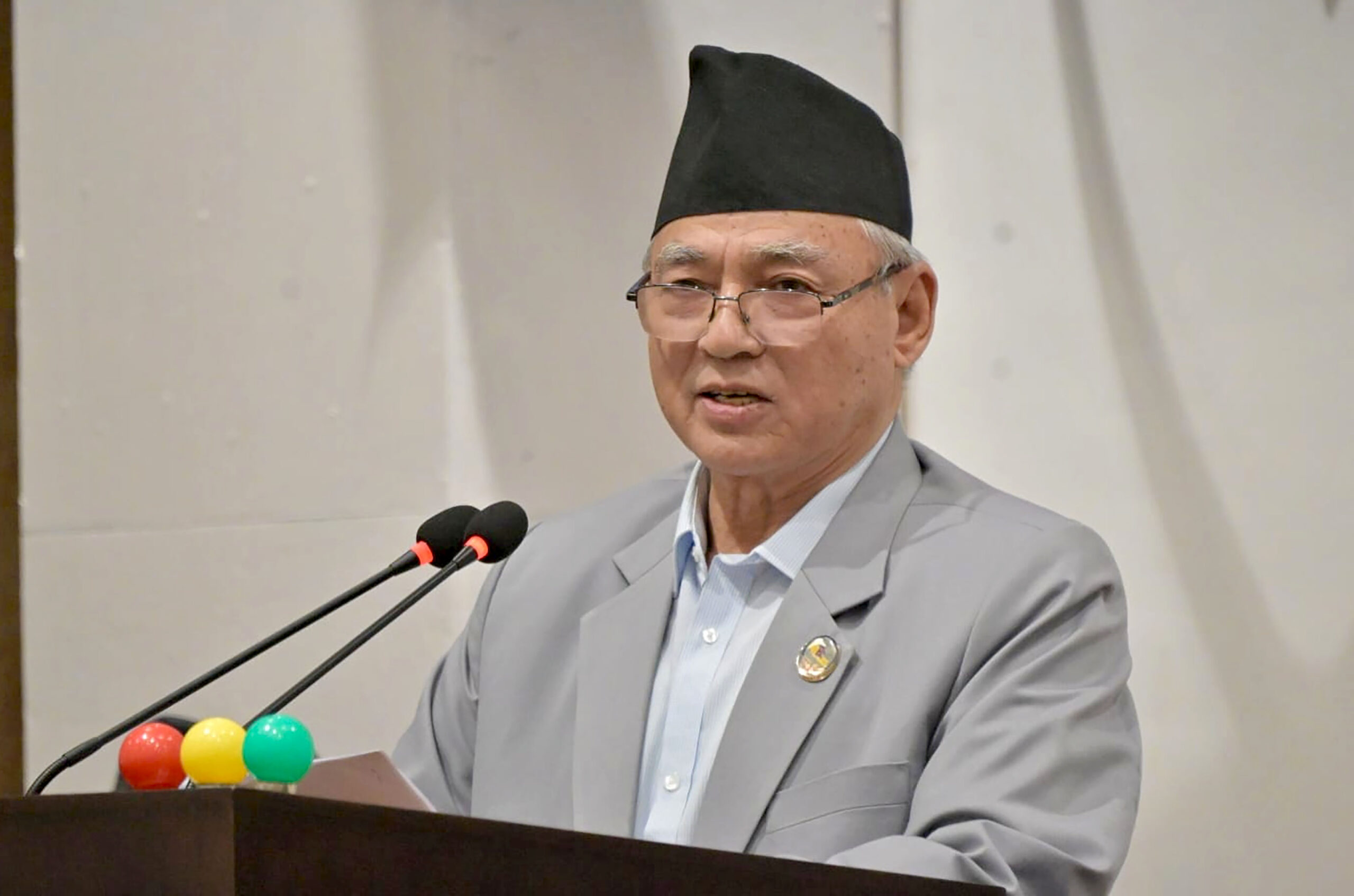
Kathmandu, April 2: The leader of the CPN (UML) Parliamentary Party, Ram Bahadur Thapa, has called for an impartial investigation into incidents of violence, destruction, and arson that occurred during the Gen Z uprising on September 8–9, 2025.
Addressing the first meeting of the first session of the House of Representatives, he demanded a thorough inquiry into the destruction of public property, vandalism of physical infrastructure, and arson attacks reported during the movement. He also alleged that the violent activities were carried out in a planned manner.
Vice Chair Thapa extended congratulations to the Rastriya Swatantra Party (RSP) for emerging as the largest party in Parliament following the recent elections.
He acknowledged that the election results had reduced the UML’s position to that of a smaller party in the House, but affirmed that the party would continue to move forward by confronting challenges.
He stated that individuals who worked for the country’s development have been labeled as “killers” and “villains,” whereas those responsible for burning Parliament and Singha Durbar are being presented as “great heroes.”
He accused the Rastriya Swatantra Party (RSP) of leading what he described as an “undeclared color revolution” carried out in an unconstitutional manner on September 8–9, 2025. He further claimed that this so-called “color revolution” was legitimized as a “blue revolution” through the general elections held on March 5, 2026.
Thapa also described the oath-taking of Prime Minister Balendra Shah as a “historic and magical victory,” congratulating both the RSP and the Prime Minister.
He alleged that several domestic institutions—including the Nepali Army, bureaucracy, the then government led by Sushila Karki, and the probe commission led by Gauri Bahadur Karki, as well as non-governmental organizations like Barbara Foundation — played decisive roles in that outcome.
On the external front, he claimed that “invisible forces,” including artificial intelligence, algorithms, and propaganda mechanisms, influenced the process by portraying champions of nationalism, democracy, federalism, peace, and prosperity as villains, while glorifying those responsible for destruction.
Referring to the Gen Z movement, Thapa raised a series of questions about what he described as suspicious activities. He questioned the motives behind arson attacks on key state institutions such as Singha Durbar, Shital Niwas (President’s Office), PM Residence in Baluwatar, the Supreme Court, police stations, private homes, and business establishments.
He also questioned who instigated students to breach restricted areas, the role of alleged armed elements during the protests, and the reasons behind the arrests of former prime ministers and home ministers.
Furthermore, he expressed concern over what he described as ongoing suppression, including arrests of political leaders, restrictions on the right to organize, media trials, and cyber intimidation. He stated that UML would continue to raise its voice against such actions.
Concluding his remarks, Thapa said that although answers to these questions may emerge in the future, his party would continue to press the state with full force to seek accountability. #nepal #house