


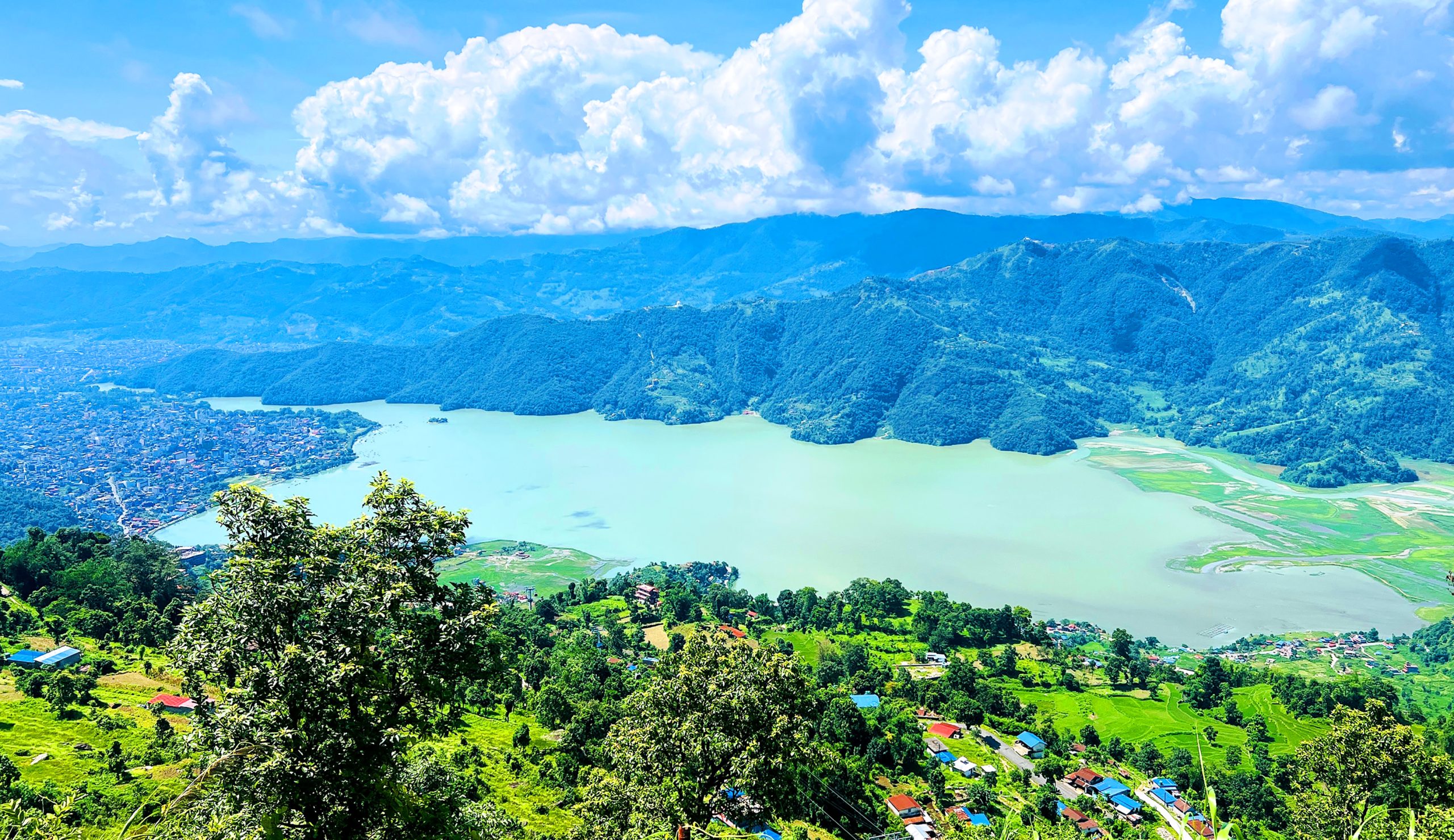
Pokhara, May 9: Concerns are growing over the future of Phewa Lake as encroachment, pollution and unchecked construction continue to shrink the iconic lake, a major tourism attraction of Pokhara.
Many visitors mistakenly believe the lake is directly fed by snowmelt from the reflected Himalayan peaks, including Machhapuchhre and Annapurna Range. However, the lake mainly receives water from streams such as Harpan Khola, Buloudi and Phirke, along with springs and rivulets from the watershed area.
Experts warn that the lake, which has reportedly shrunk by nearly half over the past six decades due to natural sedimentation and human encroachment, cannot survive without protection of its 123-square-kilometre watershed area.
According to the Integrated Watershed Management Centre, harmful activities within the watershed must be controlled to prevent floods, landslides, soil erosion and sediment buildup.
Rapid land plotting, hillside cutting and the construction of hotels and resorts around the watershed are accelerating the lake’s degradation. Local resident Trilochan Parajuli recalled that during his childhood the lake extended much farther and its water was clean enough to drink directly.
In a landmark verdict in 2075 BS, the Supreme Court of Nepal ordered authorities to clear a 65-metre zone around the lake, convert it into green space and protect the watershed area. The court also directed the construction of check dams on Harpan and Phirke streams to stop soil and waste from entering the lake.
However, seven years later, the court order remains largely unimplemented. Following the formation of the government led by Prime Minister Balendra Shah, hopes have risen for renewed conservation efforts. The government’s governance reform agenda includes clearing structures encroaching on the lake within three months.
A task force formed by the Ministry of Land Reform has already submitted a report on the lake’s land area to the government. Dhanraj Acharya, Mayor of Pokhara Metropolitan City, expressed optimism that the federal government would move forward with compensation and beautification plans.
Authorities estimate that compensation for land within the 65-metre boundary could cost around Rs. 10 billion at government rates and up to Rs. 50 billion at market value.
Rights activist Ram Bahadur Poudel said the lake must be protected even if affected residents need compensation or relocation. Advocate Khagendra Subedi, whose petition led to the Supreme Court verdict, said strong political will is needed to implement the ruling despite possible resistance from influential groups.
Studies warn that if sedimentation continues at the current rate, the lake could disappear within the next century. Members of the Jalari fishing community, whose livelihoods depend on the lake, also fear displacement if strict regulations are enforced. More than 500 structures currently stand within the protected boundary area. #Nepal