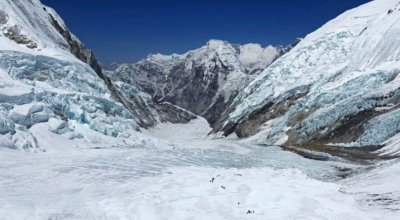




Kathmandu, May 29: As Nepal observes International Everest Day on Friday, concerns are growing over increasing pollution on Mt Everest, with some activists even calling for a temporary suspension of climbing permits for several years.
This year saw record mountaineering activity, with the government issuing 495 climbing permits for Everest and around 275 climbers reaching the summit in a single day — a historic high. Stakeholders, however, have suggested giving the world’s tallest peak some “rest.”
The day commemorates the first successful ascent of Everest by Tenzing Norgay and Edmund Hillary in 1953. Many climbers who summited Everest this season are celebrating their achievement, while others have already returned home.
The Department of Tourism issued climbing permits to 495 foreign climbers for Everest this season. However, around 800 climbers — including Nepali climbers — are reported to have summited the mountain so far, although the figure has yet to be officially verified.
However, Mingma Chhiri Sherpa, chairperson of the Khumbu Pasang Lhamu Rural Municipality, said Nepal should not adopt a complete closure or “rest” policy for Everest. Instead, he argued that the number of climbers should be better managed through stricter standards and qualification criteria.
He suggested introducing legal provisions allowing only experienced mountaineers to climb Everest, such as requiring climbers to have previously summited a 7,000-metre peak.
According to him, limiting climber numbers through qualification standards would also help promote Nepal’s other mountains. “If climbers were required to first climb other high-altitude peaks, it would encourage mountaineering activities in different seasons and create more employment opportunities for climbers and mountain workers beyond the short spring climbing season,” he said.
Speaking about waste and dead bodies left on Everest, Sherpa said the government must allocate a certain percentage of the royalties collected from Everest expeditions toward mountain cleaning and waste management.
He argued that although the government earns millions in royalties from Everest expeditions, it has not paid sufficient attention to maintaining cleanliness on the mountain.
He also stressed that climbers and expedition operators should be held accountable for the waste they generate. According to him, stricter control mechanisms and stronger monitoring systems are needed to ensure climbers bring back all waste produced from Everest Base Camp to the summit and back down.
Himal Gautam, Information Officer at the Department of Tourism, acknowledged concerns regarding pollution on Mount Everest and the use of royalty funds.
He said existing laws, including the Tourism Act 2035 and the Tourism Regulation 2059, require climbers to deposit a refundable garbage management fee before expeditions, which is returned after receiving waste clearance certification.
According to Gautam, this provision has created a “paradox,” as the government cannot permanently retain the deposit money even though complaints about increasing waste on Sagarmatha continue to grow.
To address the issue, he said the government has introduced a new tourism bill in Parliament based on recommendations from the department and ministry. The bill, already approved by the National Assembly, proposes replacing refundable garbage deposits with a non-refundable waste management fee. The fund would be used for mountain clean-up campaigns and the welfare of Sherpas.
On revenue sharing, Gautam explained that the Constitution assigns local governments responsibility for waste management, while mountaineering royalties are treated as revenue generated from natural resources.
Under the current revenue-sharing mechanism, the federal government receives 50 percent of mountaineering royalties, while 25 percent goes to the respective provincial government and the remaining 25 percent to local governments and affected communities.
However, there is currently no legal provision requiring a fixed percentage of Sagarmatha royalties to be specifically allocated for waste management.
Gautam also said the court has instructed the government to assess the carrying capacity of Everest and other mountains and determine climber limits accordingly. According to him, studies are being planned to evaluate how many climbers can safely be allowed on Everest each year, although the assessment has not yet been completed. A clean mountain action plan is also being prepared.
Referring to the existing rule requiring climbers to bring down eight kilograms of waste, Sherpa said the provision was based on outdated estimates and lacks effective monitoring. He stressed that authorities must strictly monitor whether climbers are actually bringing waste down from higher camps, including areas above Camp II.
According to him, responsibility for monitoring climbing activities lies with Nepal’s Department of Tourism, which should enforce regulations more strictly.
Speaking about the local government’s role, Sherpa said the Khumbu Pasang Lhamu Rural Municipality has been managing waste below Everest Base Camp and coordinating garbage management at Base Camp through the Sagarmatha Pollution Control Committee, a local institution that has worked in the region for more than 30 years.
He said the rural municipality has implemented mountain management guidelines for Everest and other peaks, including Ama Dablam. The guidelines address environmental protection, campsite management, and climate-related issues in mountain regions.
Sherpa further noted that since 2024, the rural municipality has made it mandatory for climbers to carry back their own human waste through the “poop bag” system, adding that the government later expanded the practice to other mountains as well. #Nepal #everest