


Dhulikhel: The Government of Nepal, Dhulikhel Municipality, Dhulikhel Hospital, the Embassy of the Federal Republic of Germany, and German Development Cooperation jointly inaugurated and launched three key development initiatives in Dhulikhel on Wednesday, aimed at strengthening healthcare services, community infrastructure, and renewable energy development.
The events were attended by German Ambassador Udo Eugen Volz, representatives from KfW Development Bank, GIZ Nepal, and PTB, along with government officials, hospital representatives, and local stakeholders.
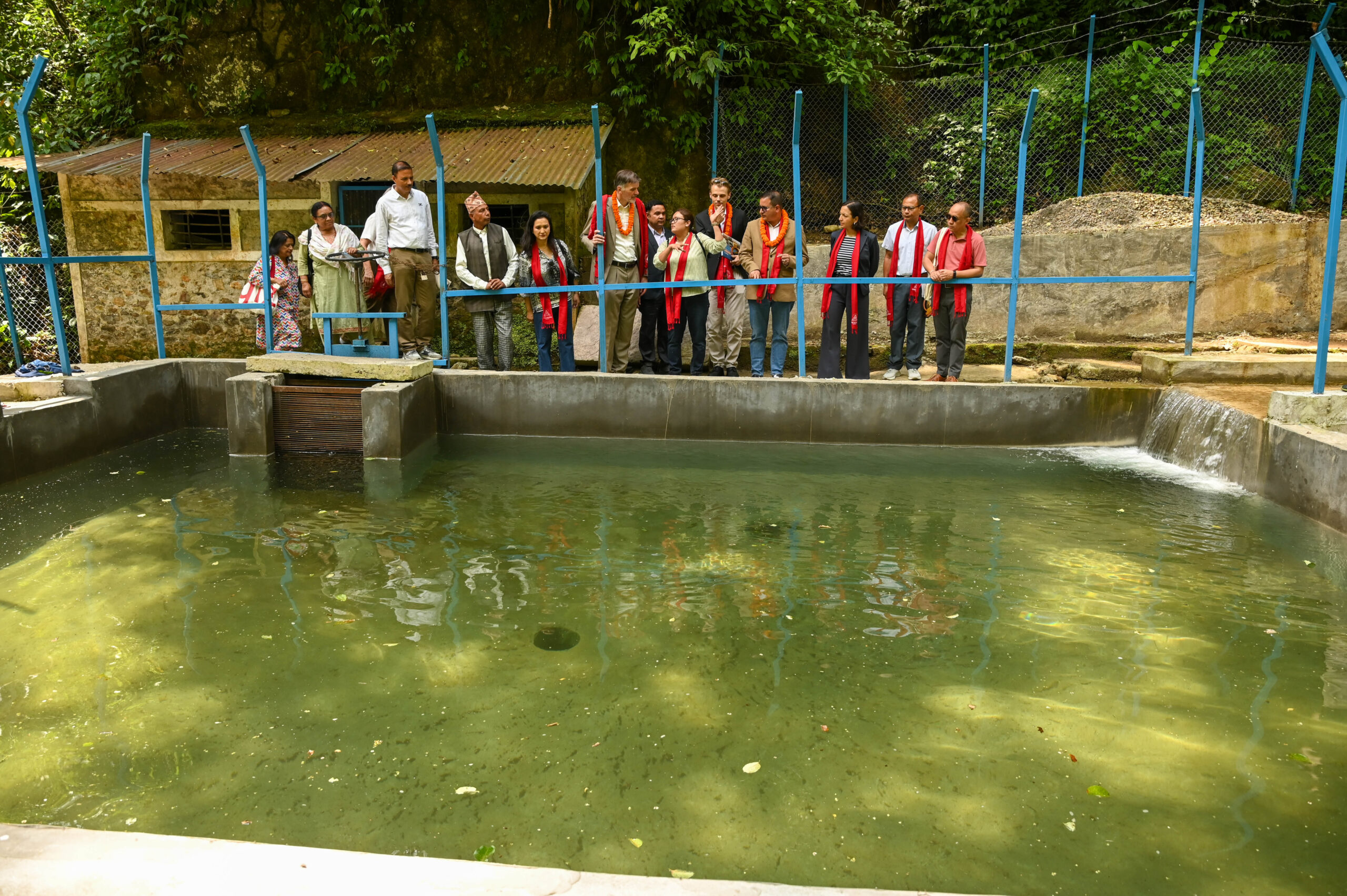
The programme began with the inauguration of the rehabilitated Dhulikhel Drinking Water Supply System by Acting Mayor Nirajan Jangam and Ambassador Volz. The rehabilitation was funded by the German Government through the Support to the Health Sector Strategy (S2HSS) programme implemented by GIZ Nepal.
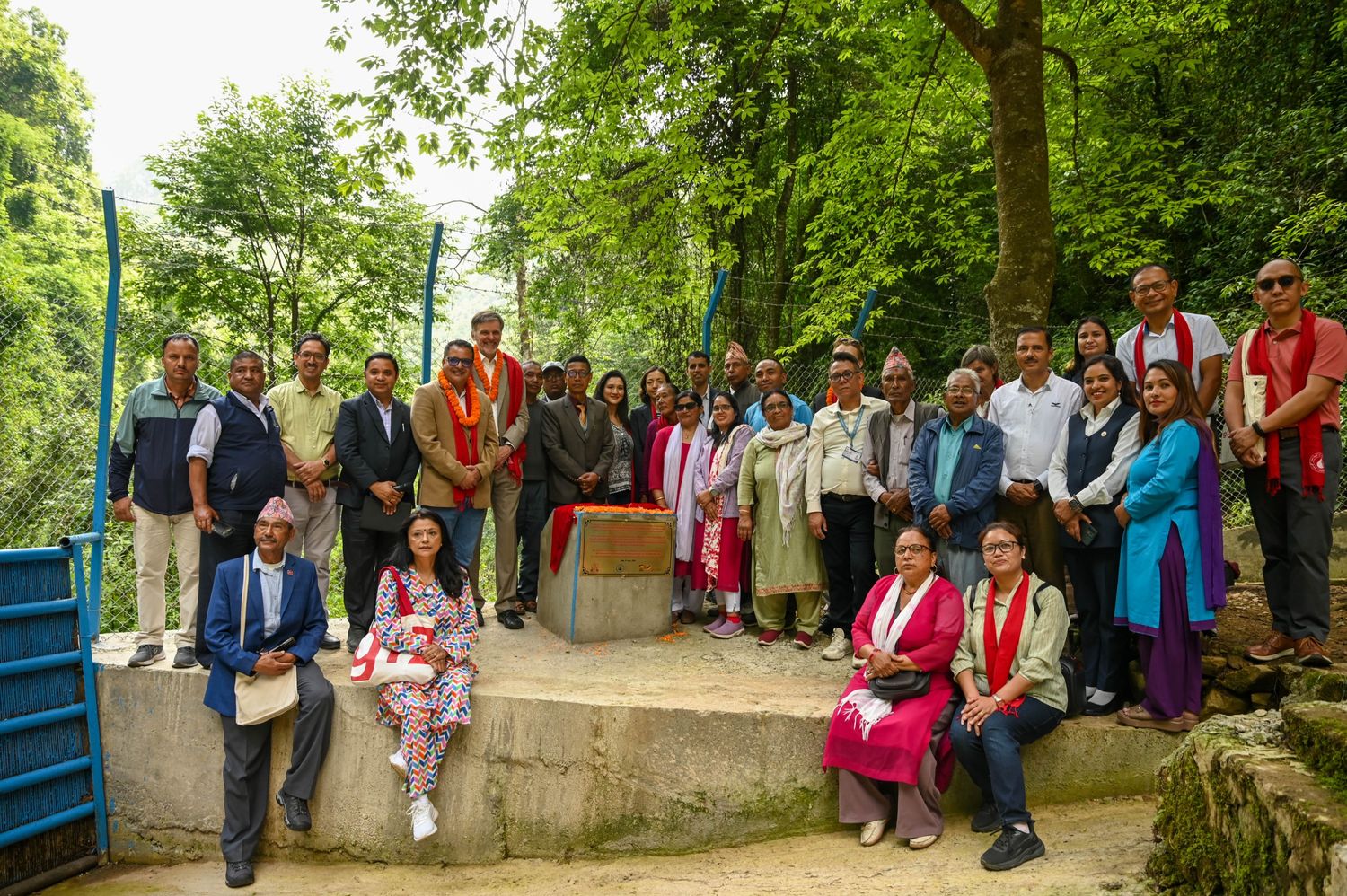
Established in 1992 through Nepal-Germany cooperation, the drinking water system has provided safe water to more than 20,000 residents as well as major institutions including Dhulikhel Hospital and Kathmandu University. Following extensive damage caused by floods and landslides in September 2024, Germany contributed up to EUR 120,000 for rehabilitation works, with additional support from Dhulikhel Municipality. The project included reconstruction of damaged intake structures, stabilization measures, and repairs to transmission pipelines.
The programme also marked the inauguration of a new Healthcare Waste Management Treatment Site equipped with autoclave technology at Dhulikhel Hospital. The facility was jointly inaugurated by hospital founder and Executive Director Dr. Ram Kantha Makaju and Ambassador Volz.
Supported under the S2HSS-II programme, the initiative aims to strengthen environmentally sound healthcare waste management practices. Since January 2026, technical assistance has helped the hospital improve waste segregation, transportation, treatment, and disposal systems in line with Nepal’s national standards. The new autoclave system is expected to enhance the safe treatment of infectious healthcare waste, protecting healthcare workers, patients, communities, and the environment. It also supports the hospital’s goal of becoming a national center for healthcare waste management training.
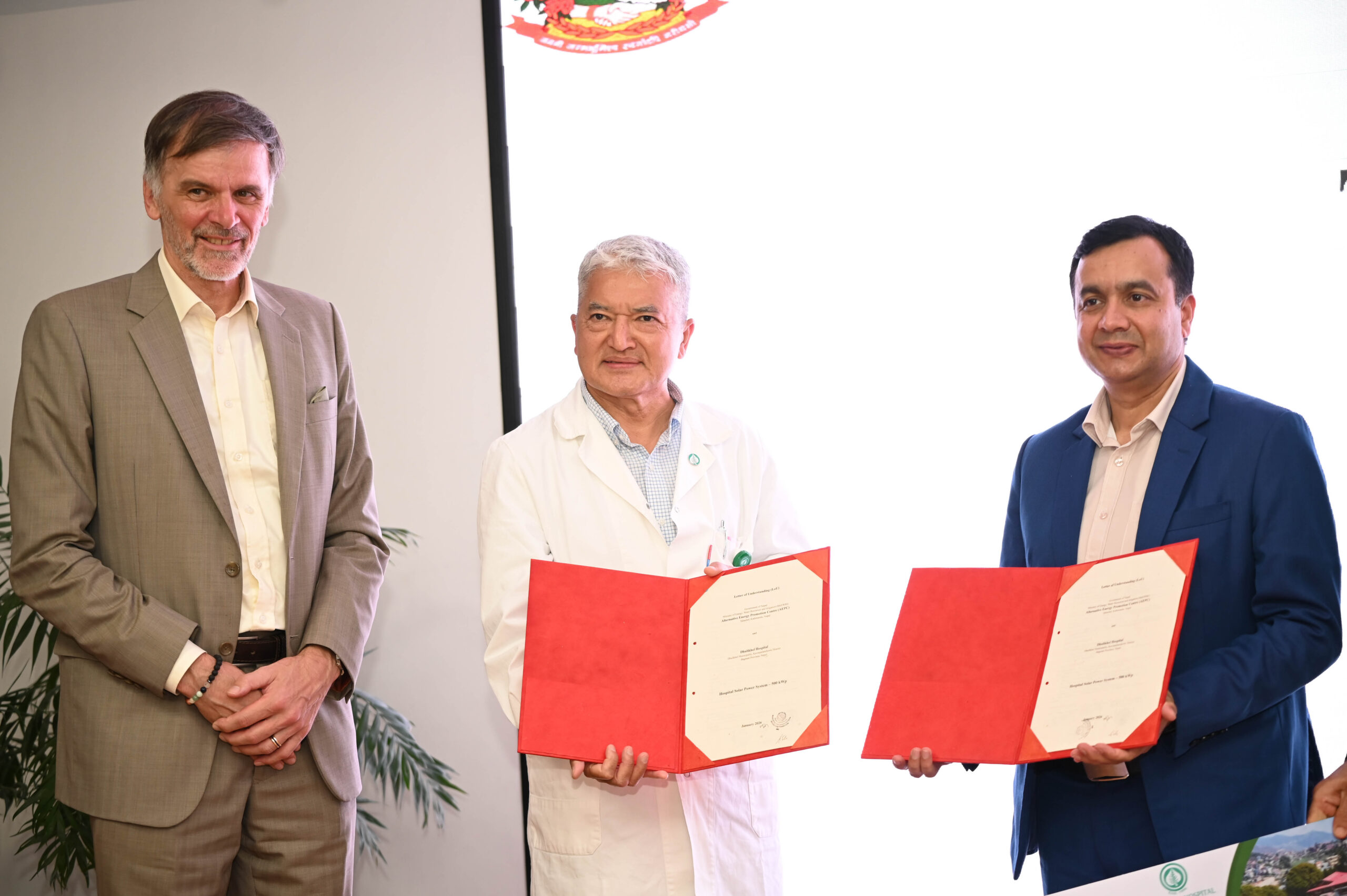
The event concluded with the launch of a 500-kilowatt rooftop solar power project at Dhulikhel Hospital, financed by the German Government through KfW Development Bank.
Scheduled for completion in 2026, the solar photovoltaic system with battery storage will provide reliable electricity for critical hospital services, including operation theatres, emergency care units, and pathology laboratories. The system is expected to generate approximately 778 megawatt-hours of electricity annually and reduce the hospital’s energy costs by an estimated NPR 9.5 million per year, while contributing to lower carbon emissions.
Germany has remained a long-standing development partner of Nepal in renewable energy, healthcare, and sustainable economic development. Through financial cooperation via KfW and technical cooperation through GIZ and PTB, Germany continues to support Nepal’s efforts toward inclusive, climate-resilient, and sustainable development. #nepal