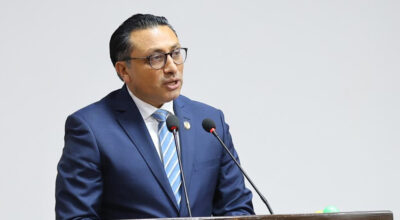



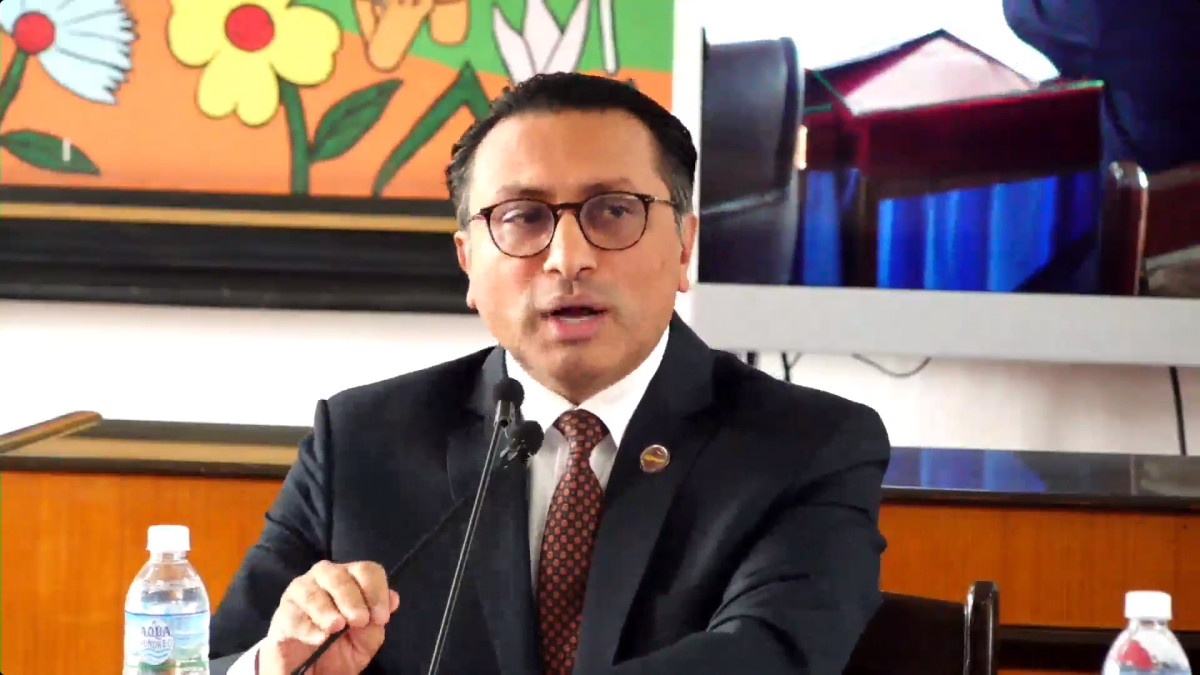
Kathmandu, June 11: Finance Minister Dr. Swarnim Wagle on Thursday defended the government’s budget and governance agenda, arguing that a government committed to good governance would not betray citizens within just two months of taking office.
Responding to lawmakers’ concerns in Parliament, Wagle rejected allegations of irregularities in tax rate revisions and vowed to leave public life if found guilty of any wrongdoing.
“If I am found involved in irregularities involving even a single penny, I will resign not only from the ministerial post but from public life altogether,” he said.
The finance minister described reports of irregularities in tax revisions as misleading and maintained that government intervention is necessary to regulate the market and promote economic growth.
“The budget is focused on job creation and building sustainable sources of income,” Wagle said, noting that remittances had played a key role in reducing poverty over the past two decades. He added that the new budget seeks to create employment opportunities while prioritizing farmer-oriented agricultural reforms and improvements in social security schemes.
Addressing criticism over the imposition of a three percent tax on institutional schools, Wagle said misinformation had been spread regarding the measure. He also pointed out that the government had raised the tax exemption threshold for individual income earners.
Similarly, he sought to clarify concerns regarding electricity tariffs, stating that consumers using up to 50 units of electricity would not face any additional tax burden.
Highlighting progress in the energy sector, Wagle recalled that Nepal had only 262 megawatts of electricity available when the Panchayat system ended, arguing that gradual tariff adjustments had been necessary to finance expansion of power infrastructure.
The minister also stressed that the ruling Rastriya Swatantra Party (RSP) could not afford to engage in populist politics. He said the government aims to develop community schools based on the model of Budhanilkantha School and has aligned budgetary programs with the Ministry of Infrastructure’s three-year development goals.
Defending the Rs. 2.1 trillion budget, Wagle said it was designed to initiate long-term development measures rather than serve as a populist spending package.
“Government investment alone is not enough. Nepal needs private-sector investment that is several times larger than public investment, and this budget has been prepared with that principle in mind,” he said.
Wagle, however, acknowledged that some drafting and language errors had occurred while finalizing the Finance Bill at the Law Ministry. He said the mistakes had been corrected and the revised bill had been resubmitted to Parliament. #nepal