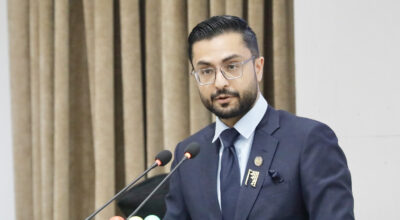



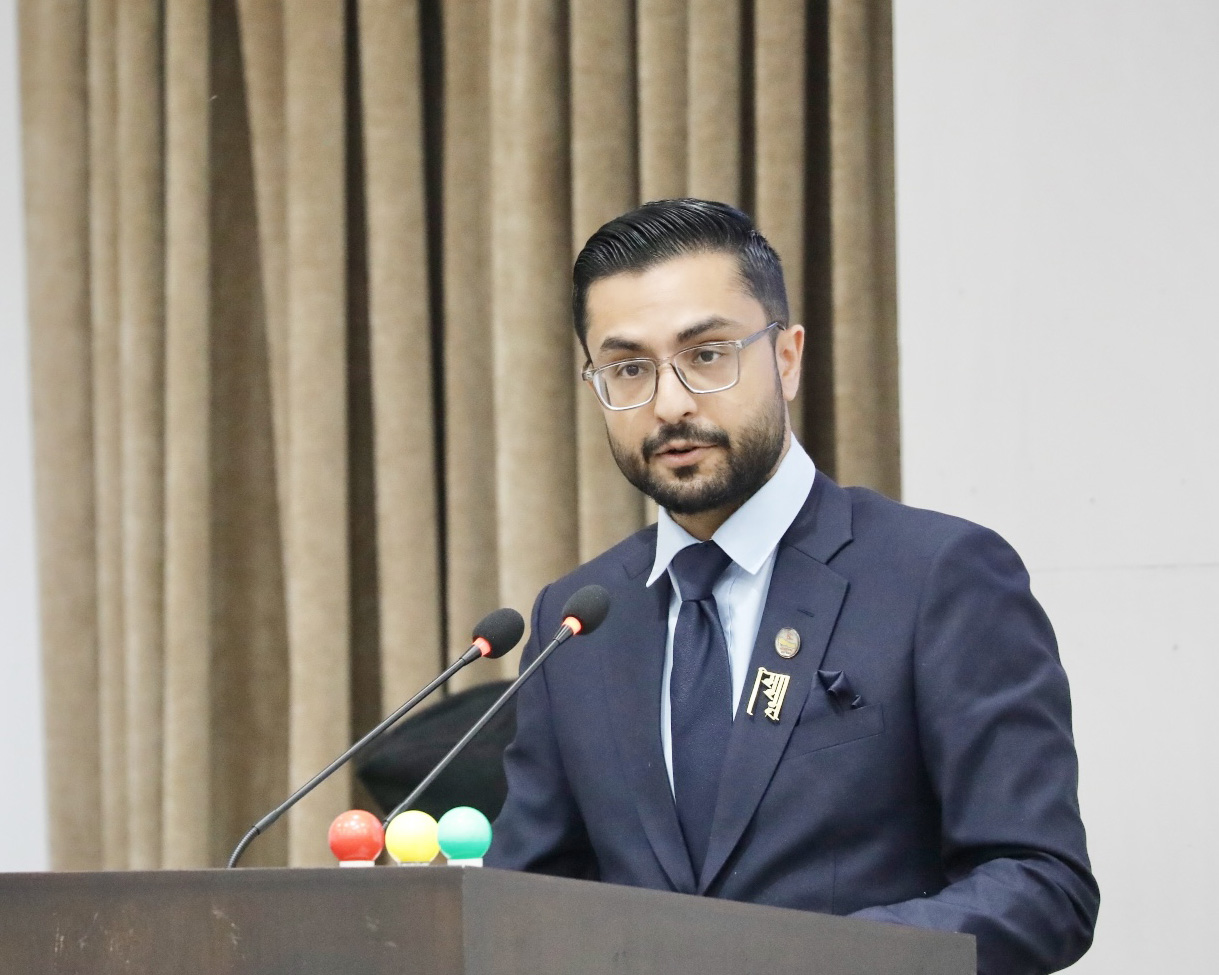
Kathmandu, July 10: Minister for Education and Sports Sashmit Pokharel on Thursday presented a summary of the government’s major achievements during its first 100 days in office, stating that the administration remains committed to institutionalising good governance through transparent, result-oriented reforms.
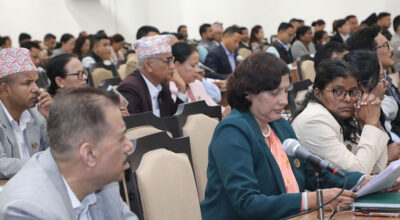
Addressing the House of Representatives (HoR), Pokharel said the government had prioritised zero tolerance for corruption, fiscal discipline, merit-based appointments, and digital public service delivery since assuming office.
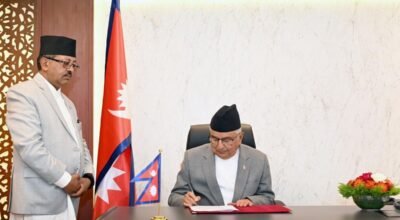
He recalled that the first Cabinet meeting chaired by Prime Minister Balendra Shah endorsed a 100-point governance reform agenda. The Office of the Prime Minister and Council of Ministers has since been monitoring its implementation through clear deadlines, responsible agencies, and performance indicators.
Pokharel said the government reduced the number of federal ministries to 18 and formed a 17-member Cabinet, a move expected to save around Rs. 20 billion annually by lowering administrative costs.
He also informed lawmakers that several policy and legal reforms had been initiated, including the tabling of the Public Procurement (Second Amendment) Bill, which aims to simplify procurement procedures and promote greater transparency and competition.
According to the minister, the government has decided to abolish trade unions in the civil service to reduce political interference in public administration.
He said a Property Investigation Commission had been formed to investigate the alleged illegal assets of senior political leaders and high-ranking government officials. More than 11,000 individuals have submitted their property details, while complaints are currently under review.
Pokharel added that the government has begun implementing recommendations from high-level investigations into the Bal Mandir land case and the Ncell share ownership dispute. It has also introduced a National Integrity Policy aimed at promoting ethical conduct, enforcing codes of conduct, and preventing conflicts of interest.
To protect public property, coordination has been established with 17 government agencies to reclaim encroached land belonging to Tribhuvan University, while records of government and public land have been updated.
Highlighting economic measures, Pokharel said the government has paid Rs. 350 million to dairy farmers, fixed the minimum support prices for wheat and paddy, and facilitated payments of Rs. 13.76 billion to sugarcane farmers.
As part of public sector reforms, the government has abolished or merged boards, committees, and projects with overlapping mandates, reduced ministry staffing through organisational and management (O&M) surveys, established a separate Ministry of Science, Technology and Innovation, and initiated the auction of vehicles stranded at customs offices.
He said 31 non-productive government agencies have been dissolved, six merged, six transferred, and restructuring of 18 additional bodies is underway.
Pokharel further informed the House that Rs. 132.6 million had been recovered from university teachers who misused study leave, while 672 government vehicles being used illegally had been returned to the state.
The minister also said more than 1,500 politically appointed office-bearers had been relieved of their positions. The government has adopted a merit-based recruitment system through open competition, public advertisements, and expert selection committees. He added that Nepal is, for the first time, appointing ambassadors through open competition, with the selection process now in its final stage.
To improve public service delivery, help desks have been established at Survey and Land Administration Offices to eliminate the influence of middlemen. Postal delivery of citizenship certificates, passports, and other official documents has been expanded to 75 districts.
Pokharel said all 77 districts now have an online system through which local governments can recommend citizenship certificates. Online pre-enrolment and appointment systems have also been introduced for passport services, while the Department of Immigration has implemented a digital time-card system.
He added that government mobile applications and online portals have been made more accessible for persons with disabilities, and an integrated government website has also been launched. #nepal