


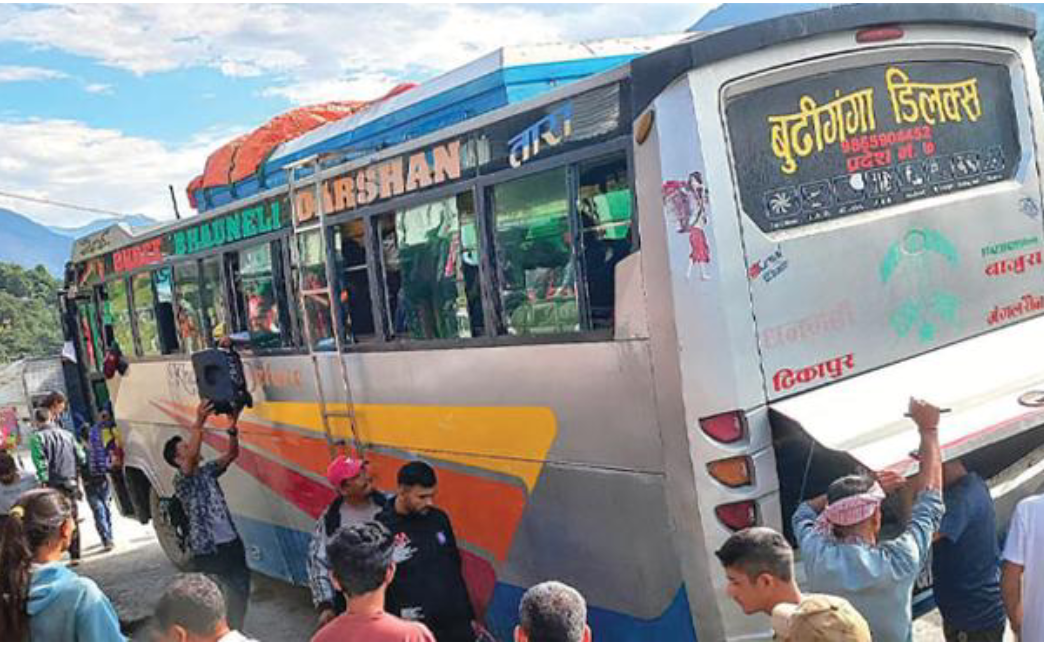
Bajura, April 24: For decades, employment in India has been a primary source of livelihood for many residents of Bajura. However, a recent wave of returnees is raising fresh concerns about unemployment and lack of opportunities at home.
In recent months, many workers who had migrated to India have begun returning to their villages after a shortage of cooking gas disrupted businesses, particularly hotels where many Nepali youths were employed. The crisis forced several establishments to shut down, leaving thousands without jobs.
Among them is Anil Sarki from Budhiganga Municipality, who lost his job when the hotel he worked at closed. “I have skills, but I can’t find work that matches them. Now that I’m back home, I’m worried about what to do next,” he said.
He also expressed frustration over the lack of support from local authorities, saying that better opportunities in villages could prevent such hardship. “No matter which government comes to power, youths are still forced to go to India just to survive,” he added.
Migration to India has long been a seasonal pattern in Bajura. Residents from areas such as Himali Rural Municipality, Swamikartik Khapar Rural Municipality, Jagannath Rural Municipality, Budhinanda Municipality, Badimalika Municipality, Gaumul Rural Municipality, Budhiganga Municipality, Triveni Municipality, and Khaptad Chhededaha Rural Municipality typically travel during the winter months and return home during farming seasons.
In recent years, however, many young people have abandoned agriculture altogether, relying instead on income earned abroad. Despite improvements in infrastructure—such as roads and access to drinking water—the outmigration trend has persisted, leaving elderly family members behind in villages.
Local representatives noted that it is now rare to find a household without at least two to four members working in India. Many youths leave school early to seek employment across the border.
At the same time, young people have criticised local governments for failing to introduce effective employment programmes. They argue that infrastructure alone is insufficient and that irrigation, subsidies, and targeted job creation initiatives are needed to sustain livelihoods.
Raj Singh Sarki, a resident of Jhali in Ward No. 7 of Budhiganga, said the pattern of migration has continued across generations. “Our forefathers worked as watchmen in India, and now we are forced to do the same. We want to work in our village, but there are no opportunities,” he said.
Ward Chairperson Rana Bahadur Thapa of Budhiganga–1 acknowledged the gap, stating that current initiatives—such as small-scale goat farming or vegetable cultivation—are not enough to ensure sustainable employment. “Only when the federal government establishes larger industries in rural areas will youths find jobs at home,” he said.
According to the 2021 national census, Bajura has 28,064 households and a population of 138,523. #Nepal #migration