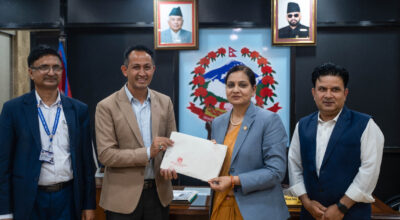




Kathmandu, May 1: Kathmandu Metropolitan City (KMC) has signed an agreement with the Youth and Small Entrepreneur Self-Employment Fund to promote self-employment and create job opportunities within the metropolis.
The agreement was signed on Wednesday in the presence of Acting Mayor Sunita Dangol, Chief Administrative Officer Saroj Guragain, Fund Executive Vice-Chairperson Anil Raj Poudel, and KMC Spokesperson Nabin Manandhar, among others.
The partnership aims to implement a joint programme under the Self-Employment Fund’s operational regulations and loan investment procedures. The initiative focuses on promoting dignified entrepreneurship through concessional loans.
According to Acting Mayor Dangol, borrowers will initially be charged an 8 percent interest rate. However, those who repay loans regularly will receive a 60 percent interest subsidy, effectively lowering the rate to 3.2 percent.
The programme will support KMC’s “One Ward, One Model Enterprise” initiative and provide seed funding to individuals and groups—including women—who lack initial capital. It also aims to help small and medium enterprises expand their operations.
Vice-Chairperson Poudel noted that many individuals with skills face challenges in accessing affordable financing. “High interest rates often discourage entrepreneurship. This collaboration will help create a more supportive environment,” he said.
Under the agreement, a dedicated fund of Rs. 40 million will be established, with both KMC and the Fund contributing Rs. 20 million each. The fund will be mobilised through banks, financial institutions, and cooperatives, and will be returned to KMC after five years.
Loans of up to Rs. 500,000 will be provided to individuals, while groups of up to 15 members can access up to Rs. 5 million. Selected cooperatives can receive wholesale loans of up to Rs. 10 million, while banks and financial institutions can obtain up to Rs. 50 million for onward lending.
Priority will be given to economically disadvantaged groups, women, Dalits, indigenous communities, gender and sexual minorities, returnee migrants, and trained individuals.
The investment will target sectors such as agro-processing, floriculture, waste management, green economy initiatives, IT and digital services, small and cottage industries, transport, healthcare, technical services, handicrafts, and homestay businesses. #Nepal