


Kathmandu, Jan 5: The National Silk Conference-Nepal 2026 is taking place in Kathmandu on coming Saturday.
The Handloom Fabrics Makers of Nepal (HFMN), a non-profit organization, is organising the conference in joint collaboration with the Sericulture Development Centre, Khopasi (Kavrepalanchok).
The Conference aims to restart and reposition Nepal’s silk industry as a strategic, high-value, and sustainable national sector by bringing together government, private sector, banks, investors, development partners, farmers, and exporters on a single national platform.
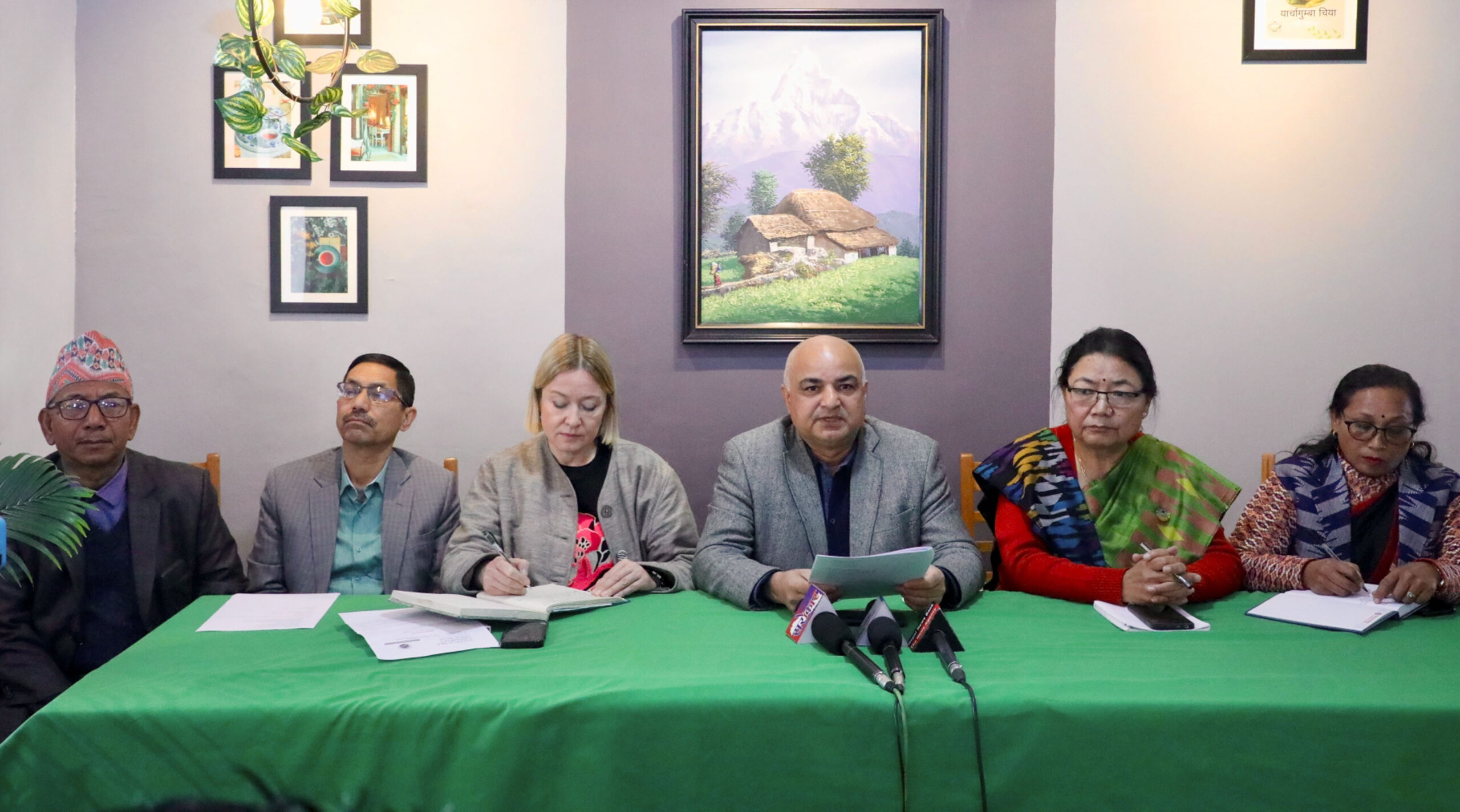
Speaking at a press meet here today, President of HFMN, Roshan Kumar Pokharel, said Nepal does not have a functioning silk industry-not because of lack of potential, but because of long-term neglect and under-investment.
At a time when global demand for sustainable textiles is rising ignoring silk is no longer an option. Global demand for natural and sustainable textiles is rising.
At the same time, Nepal urgently needs rural employment, youth and women-led livelihoods, import substitution, and export diversification. Silk offers a strategic solution to all these priorities, making immediate national action essential.
Silk is among the highest value agro-industrial products globally, offering high returns per hectare, low carbon footprint, and strong employment potential-especially for women and rural communities, Pokharel said.
According to HFMN, with structured development across the value chain-mulberry cultivation, sericulture, processing, weaving, garmenting, and global marketing-even 22,000 hectares of mulberry plantation can generate multi-billion rupees annually through value-added silk fabrics and garments.
“This potential is already proven in countries like China and India. Nepal’s challenge is not resources-it is coordination and policy focus,” Pokharel added. The press meet highlighted major structural issues facing Nepal’s silk sector.
Similarly, vice president of Handloom Fabrics Makers of Nepal, Ram Lal Shrestha, shared that the conference is expected to recognize handloom as a strategic national industry, provide policy recommendations to the government, investment and financial commitment, new partnerships between farmers, cooperatives, investors and exporters, and increased public awareness through national and international media.