


Kathmandu, Nepal, April 25: An observation report by the National Election Observation Committee (NEOC) has described Nepal’s March 5 House of Representatives (HoR) general election as a historic, while highlighting the need for significant reforms.
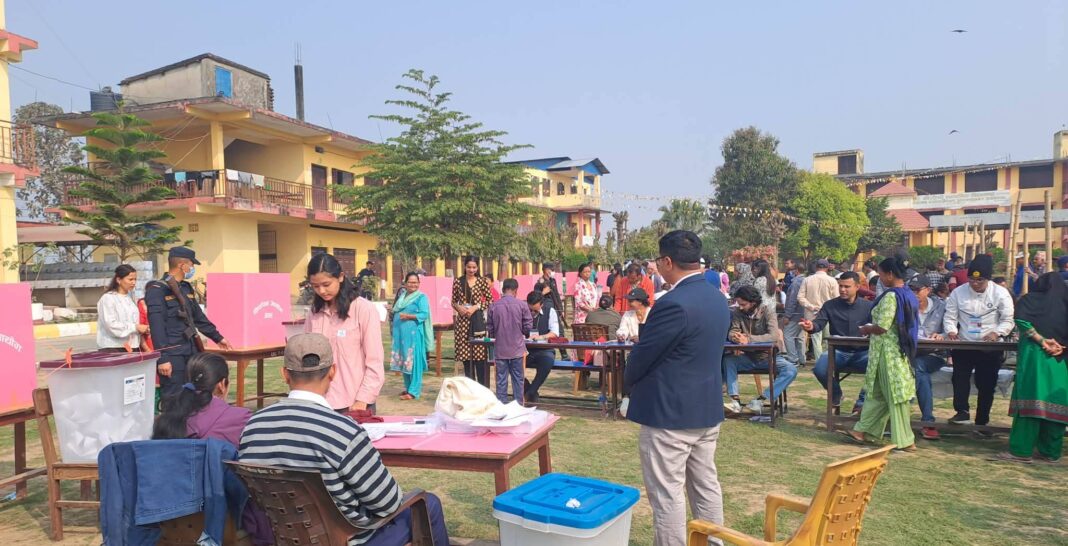
The report, titled “House of Representatives Election 2026: Comprehensive Observation Report,” states that the election was conducted in a peaceful and orderly manner, largely in line with established procedures.
According to NEOC’s short-term observers, the commitment of election staff, security personnel, and volunteers was commendable. However, the report raised concerns over unequal voter access, restrictions on observer access, and the presence of security personnel near polling stations, which could affect the perceived credibility of the process.
The report also pointed to the relatively low voter turnout of 58.07 percent and noted isolated incidents of voting boycotts, recommending improvements in future elections.
Findings from long-term observers suggest that the pre-election environment was mixed. While there were notable improvements in technical preparation, security management, and voter registration, challenges remained.
These included weak enforcement of the code of conduct, the spread of misinformation through digital platforms, lack of transparency in campaign financing, and limited opportunities for inclusive participation.
The report also criticised the Election Commission Nepal for failing to consistently enforce the legally mandated order of inclusive clusters in proportional representation (PR) lists. It noted that conflicting regulations and weak enforcement allowed political parties to submit PR lists in arbitrary order, creating room for manipulation.
NEOC recommended that the Election Commission strictly enforce a uniform cluster sequence to ensure fair and inclusive representation.
Overall, the report concluded that the election environment was only partially conducive and stressed the need for stronger enforcement and structural reforms. Despite operating with an incomplete composition of commissioners, the Election Commission was able to carry out the election process.
The report also highlighted gaps in voter education and access to election-related information, particularly in remote areas.
It further provided recommendations to seven key stakeholders, including the government, security agencies, the Election Commission, political parties, the media, civil society, and the international community. Nepal #election