


Kathmandu, April 4: Life sometimes takes unexpected turns—moments when everything seems to fall apart and the future appears uncertain. Yet, even in the darkest times, there is light of hope for those who dare to seek it. The story of Shishir Dahal is one such example of resilience and hope.
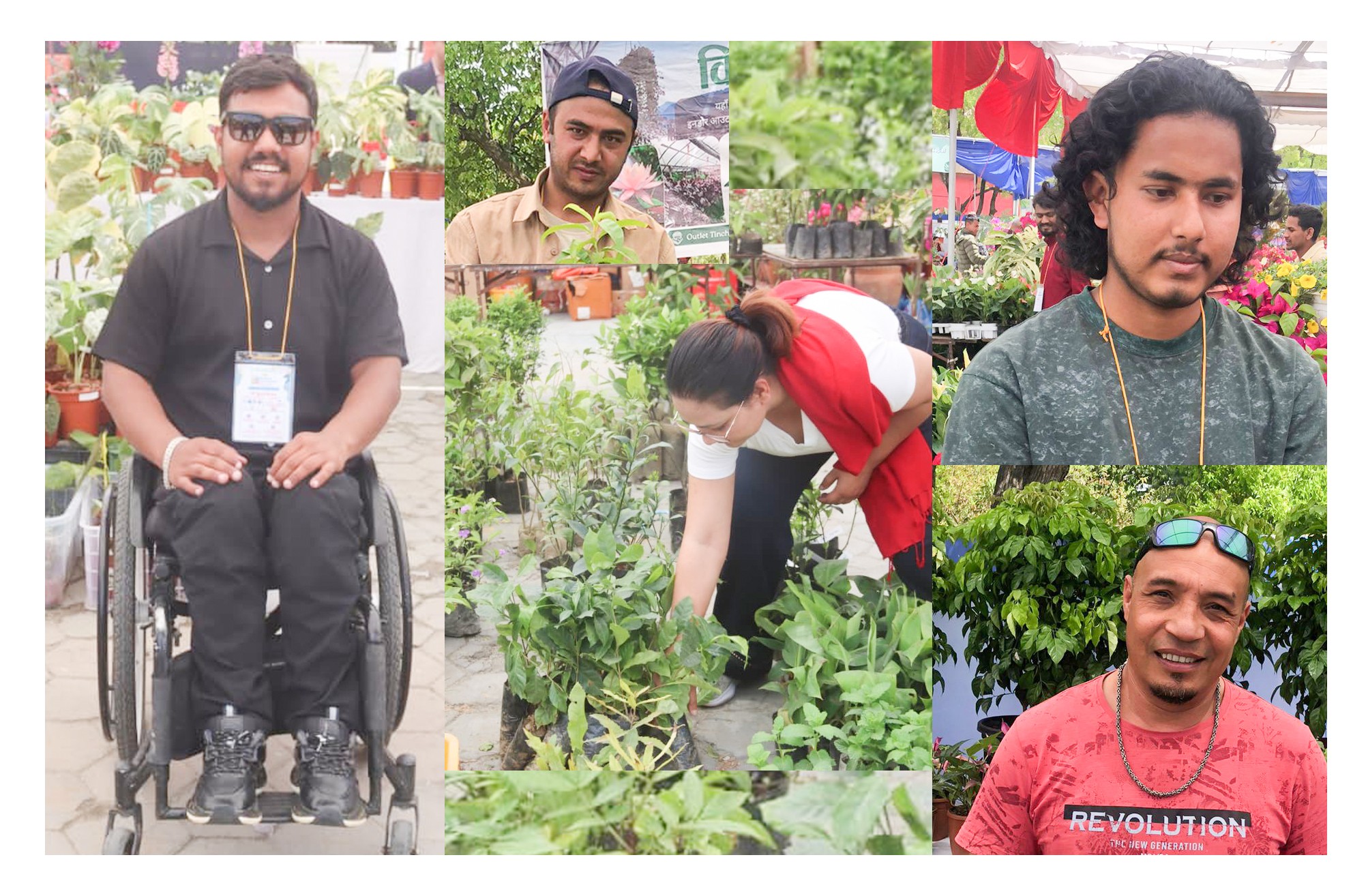
Born in Sindhuli district, Dahal now lives in Dadikot, Bhaktapur, where he continues to pursue his dreams. At just 25, he has already faced significant challenges. In 2078 BS, a life-altering accident left him with a spinal injury, resulting in physical disability. Since then, he has relied on a wheelchair for mobility.
The aftermath of the accident brought not only physical limitations but also emotional struggles. Questions like “What next?” and “How do I move forward?” often weighed heavily on his mind. Words from others—ranging from sympathy to discouragement—added to his pain.
However, while the accident weakened his body, it strengthened his determination. Refusing to accept defeat, Dahal chose to rebuild his life. “Should I accept this as my fate, or rise and do something?” he recalls asking himself. That question became the turning point in his journey.
With a background in agriculture, Dahal had previously spent two years training farmers, promoting productivity and self-reliance. After the accident, working under others became difficult, prompting him to start his own venture. In 2079 BS, he launched a nursery business.
The beginning was far from easy. Physical challenges, limited resources, and policy hurdles stood in his way. Yet, Dahal persevered. Working closely with soil and plants, he gradually rebuilt both his livelihood and confidence. Today, each plant in his nursery reflects not just business success but a story of struggle and determination.
His efforts are now paying off, generating a promising income. Dahal believes that hard work can create opportunities within Nepal itself. “If you work hard, you don’t have to go abroad. There is a future here,” he says, acknowledging challenges but expressing optimism about the future.
Dahal was recently seen at the Third Horticulture Fair at Bhrikutimandap, where his confidence and determination stood out. His journey serves as a powerful reminder that with belief, patience, and courage, even the toughest challenges can be overcome.
Amid the peaceful, green surroundings of Kirtipur, new life sprouts every day at Budhathoki Nursery. Along with this growing greenery, Surasa Ojha is carving out her own identity. For her, the nursery business is not just a livelihood—it is a dream passed down through generations.
The nursery was originally started by her grandfather, driven by a passion for flowers and plants. “My grandfather started it, and I’ve been actively involved for the past four years,” she says.
However, her journey has not been easy. In Nepali society, horticulture is still not widely regarded as a prestigious profession. Despite social pressure to pursue more conventional careers, Ojha has remained committed.
“People often think there is little respect in this field, and sometimes I feel underestimated,” she admits. Yet, she sees challenges as opportunities. “We need to change this mindset ourselves,” she adds with determination.
Her nursery offers a wide range of plants—from flowering species and fruit saplings to ornamental and rare varieties. With growing urban interest in greenery, home gardening, and environmental awareness, she believes the sector holds strong potential. For Ojha, this business is also a campaign for environmental conservation. “Planting a tree is like planting the future of a clean environment,” she says.
Turning crisis into opportunity
Dipendra Tuladhar from Lalitpur represents another inspiring journey. Previously running an advertising agency, his business was severely affected during the COVID-19 pandemic. As lockdowns disrupted markets, he faced mounting challenges.
While family members encouraged him to go abroad, Tuladhar chose a different path. “It’s not easy abroad either,” he says. Instead, he entered the nursery business—and found success.
“Now, I earn up to Rs. 4.5 million annually,” he shares, adding that horticulture can be highly rewarding with hard work.
At the ongoing flower exhibition in Bhrikutimandap, Tuladhar is busy selling plants while also educating customers on plant care. “We don’t just sell plants—we make sure customers know how to take care of them,” he explains.
He has also introduced a one-stop solution, offering plants, pots, and related materials under one roof, making it easier for customers.
According to him, demand is rising rapidly—from homes and apartments to hotels and offices. “Earlier, people used to give flower bouquets; now potted plants are becoming more popular,” he notes, citing their longevity as a key factor.
Rising market and new opportunities
Similarly, Diva Nursery, based in Sankhu, Kathmandu, is gaining recognition in the local market. Managed by Akash Sapkota, the business supplies plants through outlets in Bouddha and Gothatar.
Having grown up observing his brother’s work, Sapkota gradually entered the business. “I learned by watching and working alongside my brother,” he says. According to him, the nursery generates around Rs. 500,000 monthly, reflecting the sector’s growing profitability.
The expansion of urban areas, increasing housing, and rising interest in greenery have all contributed to the growth of the nursery business.
Arun Bista, a 22-year-old from Morang, represents a new wave of youth choosing to stay in Nepal. While many young people aspire to go abroad, he is building his future in floriculture.
“I don’t plan to go abroad. I want to grow in this business,” he says. Having grown up around plants, he sees strong potential in the sector.
“There are plenty of opportunities here if we are willing to work,” he adds. His journey reflects a broader shift among some youth toward local entrepreneurship.
A sector with national potential
These individuals are just a few examples among many who see a future in nursery and floriculture businesses. As demand for plants continues to grow, more people are entering the sector—some even leaving other professions to do so.
According to Rabindra Thapa, Chief of the Floriculture Development Centre in Godavari, Nepal imports ornamental plants and flowers worth around Rs. 3.5 billion annually. He believes this can be replaced with domestic production.
“This sector is not just about beauty—it can strengthen employment, entrepreneurship, and the rural economy,” he says. Expanding nursery and floriculture businesses could create significant income opportunities within the country.
Over Rs 11.83 billion invested in Nepal’s nursery sector
Nepal’s nursery sector has attracted an investment of over Rs. 11.83 billion, according to the Nursery Entrepreneurs Association Nepal.
The association reports that more than 3,900 nursery entrepreneurs are currently active across the country. Spanning sub-sectors such as floriculture, fruit farming, agro-forestry, and herbal plants, the industry generates an annual turnover of approximately Rs. 6.43 billion.
According to the data, there are 751 floriculture nursery businesses, producing plants worth around Rs. 1.127 billion annually, with total flower-related production reaching Rs. 2.30 billion per year.
Similarly, around 550 fruit nursery enterprises generate an annual income of Rs. 1.65 billion. The agro-forestry nursery segment has the highest number of participants, with over 2,200 entrepreneurs, contributing about Rs. 880 million in annual turnover.
In the herbal nursery segment, around 400 entrepreneurs are engaged, generating approximately Rs. 1.60 billion annually.
The nursery business has created employment and income opportunities for nearly 120,000 people across the country.
Association President Ramji Prasad Timilsena stressed the need to expand the nursery business nationwide and urged the government to allocate adequate budget for research, promotion, and development of the sector.
He also highlighted the importance of long-term strategies focusing on supportive government policies, technology transfer, availability of quality seeds and saplings, and market expansion.
Meanwhile, the Third National Horticulture Expo, aimed at promoting nursery businesses, agricultural entrepreneurship, and employment generation, is currently underway at Bhrikutimandap and will continue until Monday. #nepal #business #nursery
(A reporting by Pragati Dhakal/RSS)