


Kathmandu, July 13: A few days ago, popular social media influencer Ishtu Karki shared a video stating that she visited Sukraraj Tropical and Infectious Disease Hospital in Teku to receive her second dose of the anti-rabies vaccine, only to find that it was unavailable.
“I came to Teku Hospital for my second anti-rabies vaccination, but the hospital doesn’t have any vaccine. I need to get vaccinated and leave, but the hospital itself says there is no vaccine, so I am confused. What should I do now?” Karki said during a live video from the hospital.
Karki’s experience is not an isolated case. Many patients across Nepal have been facing similar difficulties due to shortages of anti-rabies vaccines and other essential medicines.
As provincial and district hospitals outside the Kathmandu Valley have run out of anti-rabies vaccines, increasing numbers of people bitten by dogs and cats have been traveling to Sukraraj Tropical and Infectious Disease Hospital in Teku for treatment.
Although a few private hospitals also provide the vaccine, they charge high fees for a treatment that is available free of cost through the government’s immunization program. Currently, the vaccine is unavailable at almost all government hospitals except Teku Hospital, where only a few thousand vials remain in stock.
Hospital officials say that around 300 patients visit Teku Hospital each day to receive the anti-rabies vaccine, and the remaining stock is expected to last only for a limited period. Meanwhile, efforts to procure a new supply have stalled. According to officials, four separate tenders have been announced over the past six months, but none received any bids.
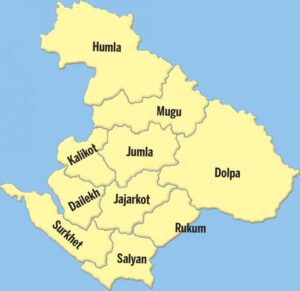
The shortage has spread across the country. Hospitals currently facing vaccine shortages include Bheri Provincial Hospital, Seti Provincial Hospital, Lumbini Provincial Hospital, Rapti Provincial Hospital, and several district hospitals. After experiencing a prolonged shortage, Karnali Provincial Hospital recently received 500 vials from the Provincial Supply Directorate.
Several hospitals in Bagmati Province—including Trishuli Hospital, Tokha Chandeshwari Hospital, Bajrabarahi Hospital, and Dhading Hospital—are also facing shortages. Similar problems have been reported at Shailaja Acharya Hospital in Koshi Province, Koshi Provincial Hospital in Bhadrapur, and Madhesh Provincial Hospital.
As a result, many hospitals have been forced to refer patients elsewhere. Bheri Hospital Medical Superintendent Dr. Navin Darnal said the hospital has had to turn away patients because the federal government has not supplied the vaccine.
According to Dr. Sher Bahadur Pun, Chief of the Clinical Research Unit at Sukraraj Tropical and Infectious Disease Hospital, the demand for the vaccine far exceeds the available supply.
“We need around 700 vials every day. Recently, more patients from outside Kathmandu have been coming here for vaccination, and this trend is increasing. This has created additional challenges. The growing number of patients from both Kathmandu and other districts has placed even greater pressure on the hospital. Moreover, patients must complete the full vaccination schedule, as a single dose is not sufficient,” Dr. Pun said.
Shortage of anti-cancer medicines
Government officials have also acknowledged shortages of anti-cancer medicines in hospitals across Nepal, affecting timely treatment for many patients.
Mayadevi Basnet of Panchthar, who has been battling cancer for several months, traveled to Bharatpur two months ago for treatment. However, she had to wait nearly a month after admission before undergoing a biopsy at BP Koirala Memorial Cancer Hospital. Her treatment was delayed further because the hospital was facing a shortage of chemotherapy medicines.
According to her family, the delay continued even after she was admitted. “The hospital authorities told us that the medicines were unavailable. This has created even more difficulties for us. Where should we go when the hospital itself says it has no medicine? We cannot afford treatment at an expensive private hospital,” said Mayadevi’s son.
Like Mayadevi, many cancer patients across Nepal have been affected by shortages of life-saving medicines. Over the past decade, the country has repeatedly faced recurring shortages of essential medicines.
The medicines currently in short supply are primarily the platinum-based chemotherapy drugs carboplatin and cisplatin, both of which are administered by injection during chemotherapy. According to experts, these medicines are used in approximately 60 per cent of cancer cases.
Platinum-based compounds play a critical role in cancer treatment by binding to the DNA of cancer cells, preventing them from multiplying and ultimately destroying them. Experts attribute the shortages to rising prices in the international market, while medicine prices in Nepal have remained unchanged for years. In addition, complex legal provisions governing medicine imports have contributed to repeated supply disruptions.
They also note that global platinum prices have increased significantly due to factors such as the COVID-19 pandemic, geopolitical conflicts—including the Iran-Israel conflict—and growing worldwide demand that has outpaced supply.
Importers argue that the main reason for the shortage of platinum-based chemotherapy drugs in Nepal is the government’s failure to revise medicine prices. Around 90 per cent of these medicines are imported from India, while the remaining supply comes mainly from Bangladesh.
Medicine importer Kishor Neupane said the maximum retail prices (MRPs) of these medicines in Nepal remain unchanged since they were set by the government 11 years ago.
“In India, prices are revised every year. A few weeks ago, they increased again. Accordingly, a 150 mg vial of carboplatin costs Rs. 2,286.85 in India but only Rs. 1,393.87 in Nepal. Similarly, a 150 mg vial of cisplatin costs Rs. 182.95 in India compared to Rs. 149.87 in Nepal,” Neupane said.
He argued that importers cannot continue operating with such a significant price gap. Neupane also said that the government has neither conducted audits nor granted import permits to several companies that have applied to import medicines over the past four years.
“If the government begins the audit process and grants import permits to eligible companies, the current shortage could be significantly reduced,” he said. According to Neupane, importers have continued supplying these medicines despite financial losses because of their importance in saving lives. However, they have informed the concerned authorities that they may no longer be able to continue doing so beyond the next three weeks.
He believes the shortage can only be resolved if the government allows medicines to be imported at revised prices under an appropriate regulatory framework. He added that the issue affects not only anti-cancer medicines but also anti-rabies vaccines.
Government considering price revision
According to Shiwani Khadgi, Acting Director General of the Department of Drug Administration (DDA), the department has acknowledged the shortages of medicines in the Nepali market. She agreed that outdated price regulations are a major reason why importers are reluctant to bring medicines into Nepal.
“The department acknowledges the ongoing shortage of medicines, particularly cancer drugs, which is primarily influenced by price adjustments,” Khadgi said. However, she clarified that the DDA cannot independently revise medicine prices. Under the current system, the Price Monitoring Committee must first submit its report, after which the Price Advisory Committee recommends revised prices to the Council of Ministers. The Cabinet then makes the final decision.
Despite the ongoing shortages, neither the Price Monitoring Committee nor the Price Advisory Committee—which is coordinated by the Minister for Health and Food Safety—has held a formal meeting for a considerable period. Khadgi said the government is now considering increasing medicine prices as part of its efforts to address the shortages.
Meanwhile, India has recently raised the prices of several cancer medicines due to increasing global production costs. Since Nepal has not made corresponding price adjustments, many importers have become unwilling to import these medicines, worsening the supply crisis.
As a result, the government appears increasingly prepared to revise medicine prices in order to restore a stable supply of essential cancer drugs. Importers, however, argue that price revision alone will not solve the problem. They say the DDA should also make the import process more competitive by allowing more qualified companies to import medicines instead of limiting approvals to only a few suppliers.
Neupane further suggested that the government establish a special committee and consult importers, manufacturers, and other market stakeholders to develop a sustainable long-term strategy for ensuring the uninterrupted supply of essential medicines across the country. #nepal