


Kathmandu, June 15: All seven provincial governments are set to present their annual budgets for the upcoming fiscal year 2026/27 on Monday (June 15), in accordance with the constitutional provision requiring them to unveil their fiscal income and expenditure statements on Asar 1 each year.
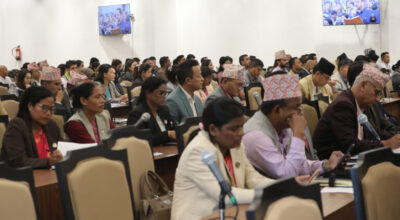
The provincial governments will table their budgets in respective provincial assemblies, outlining planned government spending, revenue estimates, and development priorities for the next fiscal year.
As per constitutional and fiscal arrangements in Nepal’s federal structure, the federal government presents its national budget on Jestha 15, while provincial governments are mandated to present their budgets on Asar 1 and local governments on Asar 10.
Provincial finance ministers will present the annual estimates of income and expenditure, along with policy priorities for the upcoming fiscal year.
The budgets are expected to focus on key sectors such as infrastructure development, agriculture, employment generation, and production growth.
Provincial budgets characteristically rely heavily on federal grants, revenue sharing, and limited internal revenue generation, making fiscal management a key challenge for subnational governments.
The provision for provincial government to present budget on Asar 1 ensures harmonised fiscal planning across all tiers of government, allowing provinces to align their programmes with the federal budget framework and intergovernmental fiscal transfers.
The federal government has allocated a total budget of Rs. 424.27 billion for provinces and local levels for fiscal year 2026/27 under the intergovernmental fiscal transfers.
The budget includes financial transfers under headings such as equalisation grants, conditional grants, special grants, and supplementary (capital) grants.
According to Ministry of Finance, Rs. 109.65 billion has been allocated to the seven provinces, while Rs. 314.62 billion has been designated for 753 local governments.
Similarly, under the local levels, the government has allocated Rs. 11.73 billion to metropolitan cities, Rs. 11.50 billion to sub-metropolitan cities, Rs. 138.66 billion to municipalities, and Rs. 152.71 billion to rural municipalities.
For the current fiscal year 2025/26, the Koshi provincial government had presented a budget of Rs. 35.88 billion, Madhes Province Rs. 46.98 billion, and Bagmati Province Rs. 67.47 billion.
Similarly, Gandaki Province had presented a budget of Rs. 31.97 billion, Lumbini Province Rs. 38.91 billion, Sudurpaschim Province Rs. 33.47 billion, and Karnali Province Rs. 33 billion for the current fiscal year.
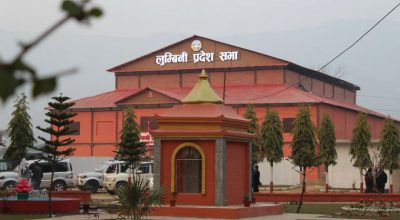
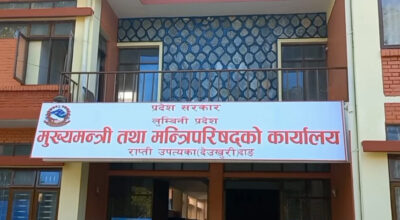
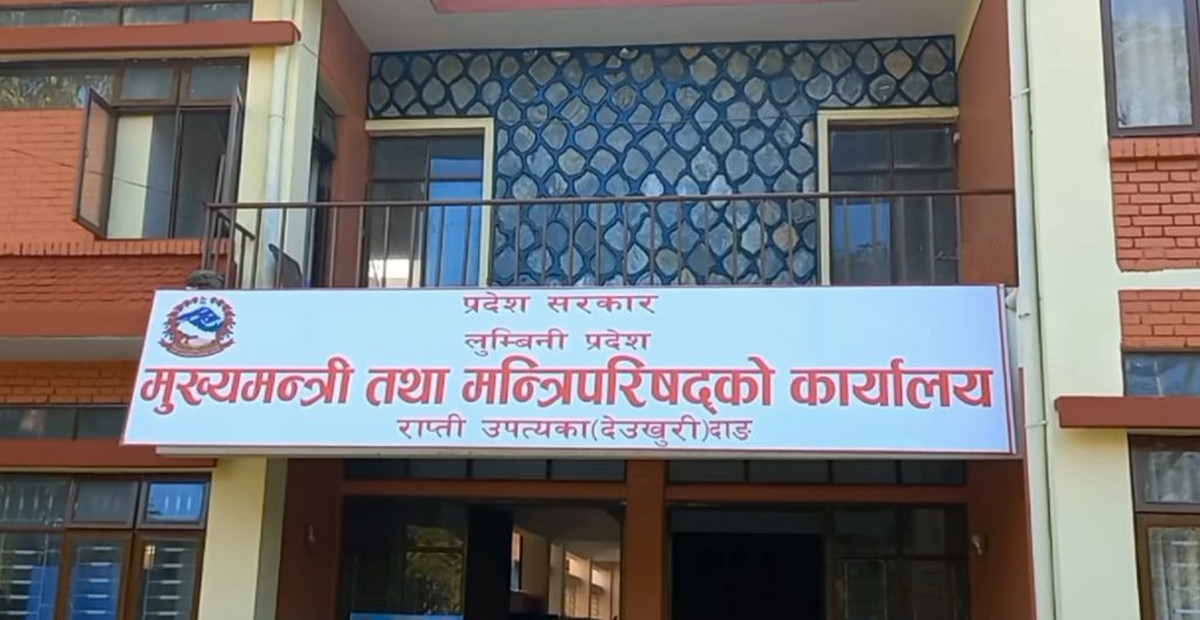
Meanwhile, according to our Lumbini correspondent, Lumbini Province government is set to present the budget for the upcoming fiscal year in the Provincial Assembly on Monday.
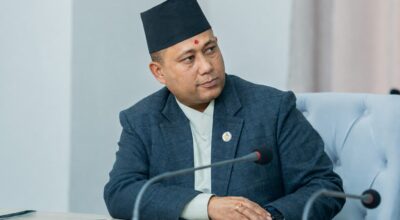
During the ninth meeting of the eighth session of the Provincial Assembly, Minister for Economic Affairs and Planning Dhanendra Karki is scheduled to present the budget.
Amid limited resources, rising financial liabilities, and pressure from incomplete development projects, the provincial government is preparing a budget focused on increasing production, creating employment, and expanding economic activities.
The government said that priority has been given to debt payment obligations, provincial pride projects, and multi-year and ongoing plans in budget formulation.
Agriculture will receive special priority in the upcoming budget.
Programmes are expected to include increasing agricultural production, expanding irrigation, promoting organic farming, conserving local and indigenous crops, branding agricultural products, and developing value chains.
The budget is also expected to include policies aimed at import substitution and export promotion by boosting agricultural output.
The government is emphasising employment creation through skill-based training, startup promotion, self-employment initiatives, and entrepreneurship development based on innovation.
In terms of infrastructure development, priority will be given to completing incomplete and multi-year projects.
The budget is expected to focus on improving capital expenditure efficiency, continuing provincial pride projects, and enhancing implementation capacity of development programmes.
The government has also prioritized digital governance, simplification of public service delivery, and financial discipline. Additionally, it aims to energise the provincial economy through tourism, industry, energy, and optimal utilization of local resources.
In particular, programmes to develop Lumbini as an international religious and health tourism hub are expected to continue in the upcoming budget. #nepal