


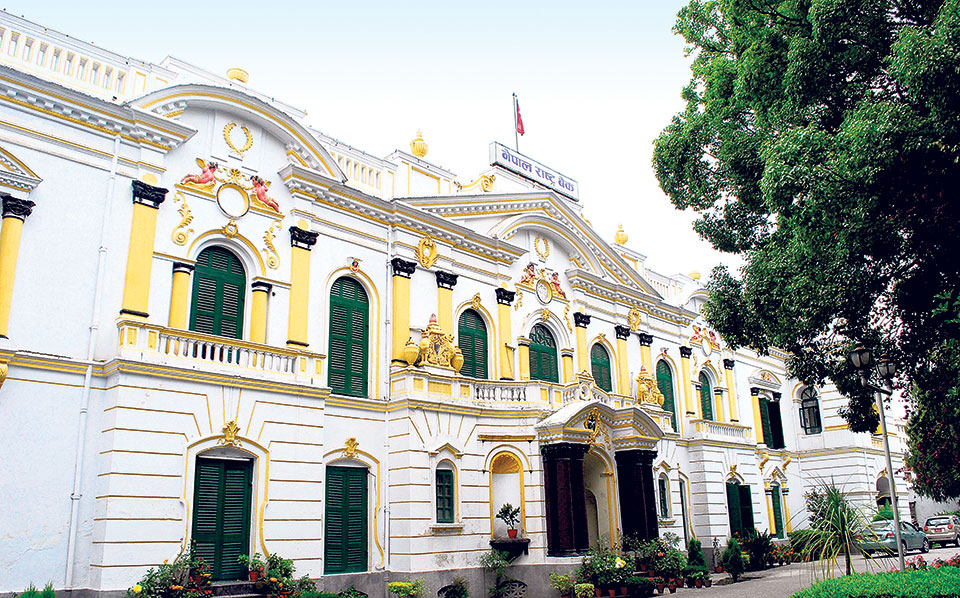
Kathmandu, Jan 13: Micro, Small and Medium Enterprises (MSMEs), which form the backbone of Nepal’s economy, are facing declining performance despite multiple government and central bank support programmes, according to a new study conducted by Nepal Rastra Bank (NRB).
MSMEs account for 99.8 percent of Nepal’s total establishments (923,356), employ 84.7 percent of the workforce (3.23 million people), contribute 62.2 percent of annual sales (Rs 2,915.6 billion), and represent 99.96 percent of enterprises led by female managers. Despite this dominant role in employment, value addition, innovation, and social inclusion, the sector continues to face structural and policy challenges.
The findings are based on a special study carried out by NRB’s Birgunj Office, which surveyed 321 MSMEs in Chitwan and Makwanpur districts using a multi-stage stratified random sampling method. Data were collected through standard questionnaires and field interviews and analysed using descriptive statistics and econometric techniques.
Key Findings
More than half of the surveyed enterprises (52.7 percent) reported a decline in performance based on turnover perception, including 29 percent experiencing a sharp decline. Only 27.1 percent reported growth, while 20.3 percent said performance remained stable.
The study found:
-
Average return on investment at 11.7 percent
-
Capacity utilization at just 50.7 percent
-
Median annual sales of around Rs 4 million
-
Paid-up capital averaging Rs 2.5 million and gross fixed capital Rs 5 million
Administrative procedures drew criticism, with 32.1 percent rating them as bad to very bad. Labor conditions emerged as a major concern, with 55.5 percent of MSMEs describing the labor environment as poor. Similarly, taxation, market conditions, and access to credit were rated unfavourably by a large share of respondents.
While 51.9 percent of firms rated infrastructure as good, access to finance remained problematic. Nearly 45 percent of MSMEs rated credit availability as bad to very bad, relying primarily on personal savings rather than institutional finance.
Support programmes from the government and Nepal Rastra Bank were rated poorly, with 82.1 percent of MSMEs describing them as inadequate.
Determinants of Performance
Using an Ordered Logit Model, the study identified key factors influencing MSME performance. Incentives and support programmes from the government and central bank, along with technology adoption, were found to have a statistically significant positive impact. Raw material availability and labor conditions also showed a positive effect, though with lower significance.
Economic and political instability emerged as the strongest negative factors affecting performance. The study also found that enterprises led by female managers performed better on average than those led by male counterparts.
Policy Recommendations
Based on the findings, the study recommends:
-
Reforming the business environment through digitisation, simplified procedures, and quality regulation
-
Ensuring fiscal, monetary, and political stability to improve business confidence
-
Expanding leadership development, skills training, and female empowerment programmes
-
Improving access to finance through innovative financial products and alternative credit assessment methods
-
Enhancing coordination among government agencies, financial institutions, and support programmes to reduce duplication and increase effectiveness
The study concludes that without structural reforms, improved coordination, and stable macroeconomic conditions, MSMEs—despite their central role in Nepal’s economy—will continue to struggle to reach their full potential. #nepal #msmes
Full Report