


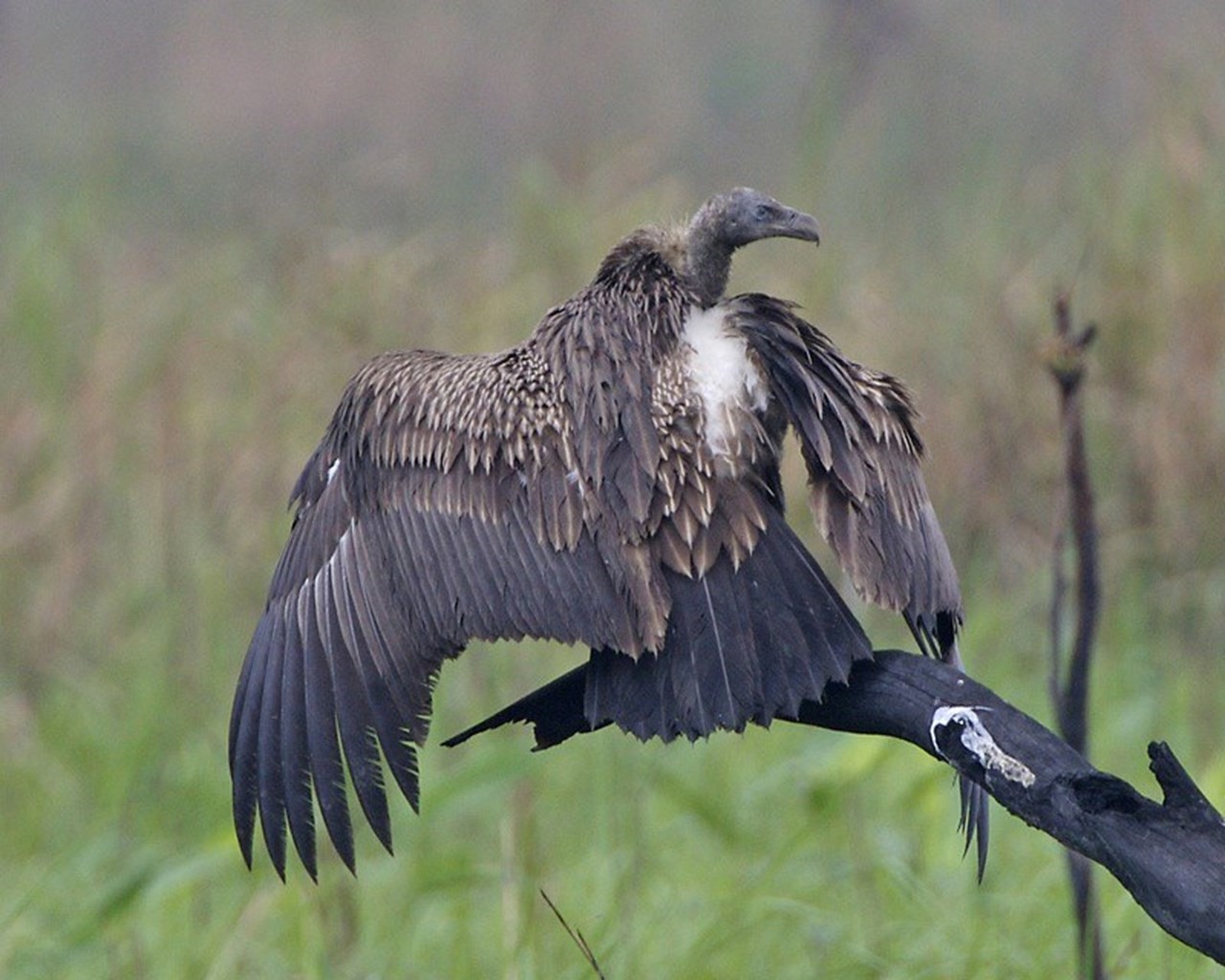
Bajura, May 12: Vultures have started reappearing in villages and forests of Bajura district after disappearing for many years, locals said. Once commonly seen around settlements, grazing fields and riverbanks, the birds gradually vanished as road access expanded and livestock trading increased in the region.
In the past, dead cattle such as cows, buffaloes and oxen were often left in open areas, attracting large numbers of vultures. However, locals said buffaloes later began to be sold to India through Kailali, while cows and oxen were taken towards China. Dead animals were also increasingly buried underground, reducing food sources for vultures.
Now, with local governments prioritising cattle farming and villagers once again leaving old or diseased dead animals near riverbanks, vultures have started returning in search of carrion. Dammar Luhar of Sherkatiya in Budhinanda Municipality said vultures are being seen in villages again after a long absence.
“When we were children, vultures were very common in the village. Later, they disappeared completely. Now they are returning to feed on dead cattle,” he said. Although vultures are often viewed as unpleasant birds, experts say they play a crucial role in maintaining environmental cleanliness and ecological balance. Vultures feed only on carcasses and are known as “nature’s scavengers”.
Experts warned that the absence of vultures can lead to carcasses remaining exposed for longer periods, increasing populations of stray dogs, jackals and rats. This can contribute to the spread of diseases such as rabies, cholera and diarrhoea among humans, and anthrax, brucellosis and tuberculosis among livestock. According to studies, a single vulture provides carcass disposal services worth around 11,000 US dollars during its lifetime.
Chief of the District Forest Office Suresh Chandra DC said there are 23 species of vultures worldwide, with nine species found in Nepal and other parts of South Asia. “When vultures cannot find carcasses to feed on, they disappear from villages. Dead cattle should not always be buried underground,” he said.
He added that medicines and chemicals used in livestock have also contributed to vulture deaths and population decline. According to him, the District Forest Office in Bajura has allocated funds for vulture conservation and protection programmes aimed at promoting the species and reducing harmful practices. #Nepal